
Combat Climate Change: How Trees Reduce Greenhouse Gases
How Trees Contribute to Climate Change Mitigation Near You: Benefits of Tree Carbon Sequestration and Urban Cooling
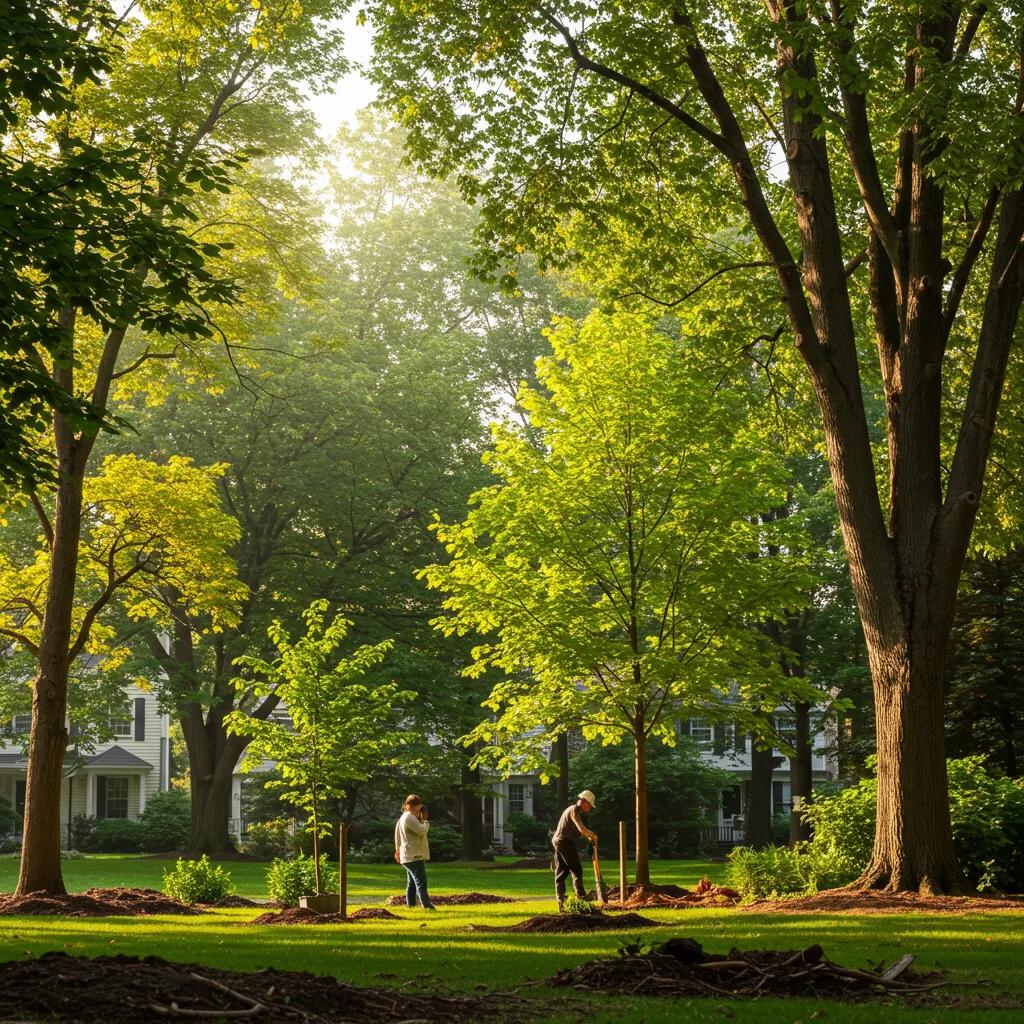
Trees act as living climate infrastructure by removing carbon dioxide from the atmosphere through photosynthesis, storing carbon in wood and soil, and reducing local temperatures through shade and evapotranspiration. In this article, you will learn how tree carbon sequestration works, which storage pools matter most, and why trees are a practical climate strategy for Jacksonville homeowners seeking urban cooling, cleaner air, and reduced energy use. Understanding how trees absorb CO₂ and deliver co-benefits like stormwater reduction and biodiversity support clarifies actions residents can take at the property scale to contribute to broader climate resilience. Many readers want actionable guidance—this guide offers mechanisms, species recommendations for Jacksonville, step-by-step planting and care instructions, and ways professional services can maximize a tree’s climate value. You will also find concise answers to common homeowner questions, tables comparing storage types and tree species, and lists of best practices to help plan plantings and maintenance. Read on to match the right trees to your yard, care for them effectively, and see how targeted investments in canopy translate into measurable climate and community benefits.
What Is Tree Carbon Sequestration and How Does It Help Mitigate Climate Change?
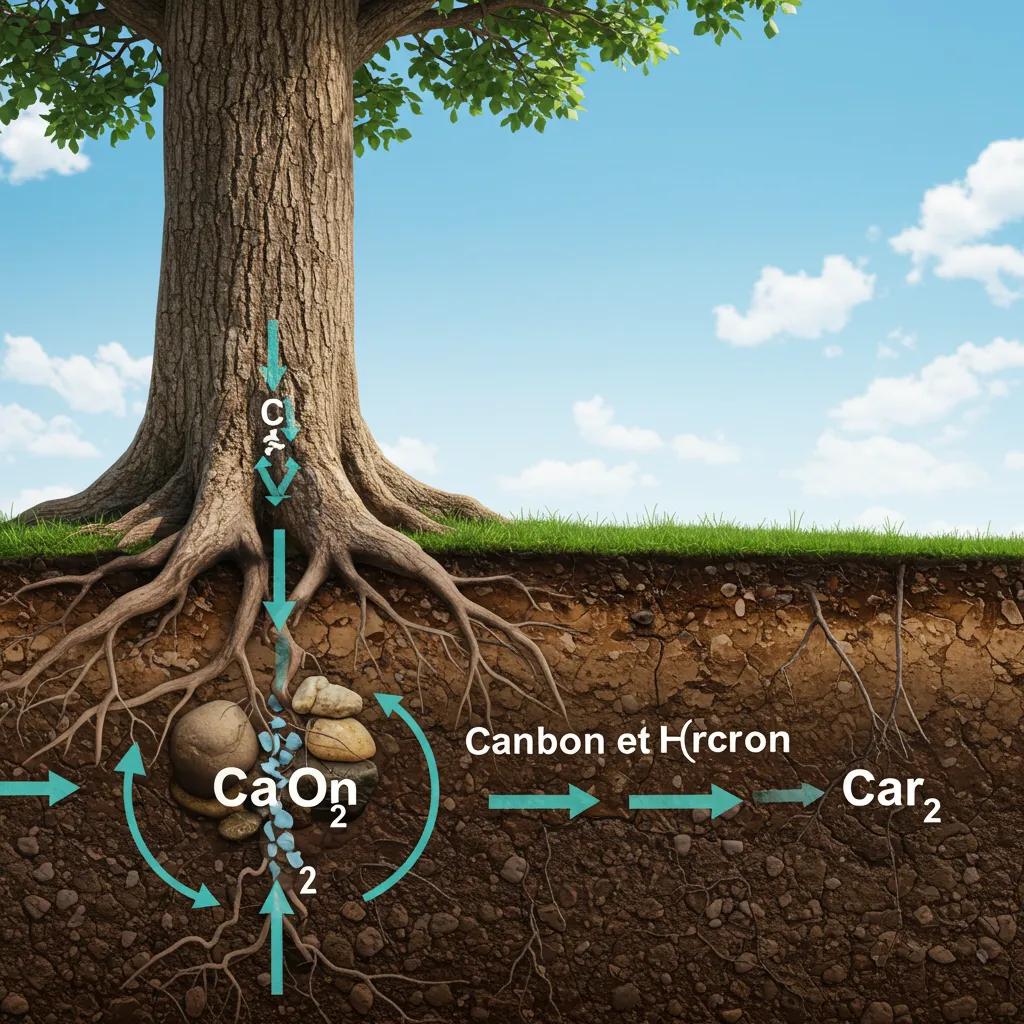
Tree carbon sequestration is the process by which trees capture atmospheric carbon dioxide through photosynthesis, convert it into biomass, and store it in trunks, branches, roots, and soil; this mechanism reduces greenhouse gases in the atmosphere and helps mitigate climate change. The chemical pathway involves plants fixing CO₂ into sugars that form wood and root tissue, producing a durable carbon pool when trees grow large and when root-associated organic matter accumulates in soil. Maintaining healthy trees increases net sequestration because vigorous growth allocates more carbon to long-lived tissues and soil, so homeowner actions that reduce stress and support growth directly boost climate benefits. The next sections break down where carbon is stored, compare pools by permanence, and explain how management choices influence sequestration outcomes.
How Do Trees Absorb and Store Carbon Dioxide?
Trees absorb carbon dioxide through leaves via photosynthesis, converting light energy and CO₂ into sugars that fuel growth and form structural biomass; this mechanism underpins carbon accumulation in trunks, branches, roots, and leaf litter. Photosynthetic uptake occurs during the growing season and depends on species, light availability, water, and nutrient supply, so local site conditions in Jacksonville influence carbon capture rates. Carbon is stored as cellulose and lignin in wood and as root-derived organic matter in soil; the relative distribution of carbon between aboveground and belowground pools determines how long carbon remains sequestered. Understanding these storage locations prepares homeowners to favor practices that protect trunk and root integrity and enhance soil organic carbon, which we’ll compare next.
What Types of Carbon Storage Do Trees Provide?
Trees provide multiple carbon storage types: living biomass in trunks and branches, deadwood and leaf litter, soil organic carbon associated with roots, and long-term storage in harvested wood products when trees are used for durable lumber. Living biomass accumulates quickly during growth but can be lost in mortality or removal, whereas soil organic carbon can persist longer when soil structure and microbial processes favor stabilization. Durable wood products extend sequestration beyond a tree’s life, while coarse woody debris creates smaller, medium-term stores that cycle back into soil. Recognizing these pools helps homeowners prioritize preservation and practices—like avoiding unnecessary removal and promoting soil health—that increase long-term carbon retention.
Which Factors Affect a Tree’s Carbon Sequestration Ability?
A tree’s sequestration ability depends on species growth rate and lifespan, age and size, health status, soil characteristics, water availability, and local climate; faster growth increases near-term uptake while longevity affects cumulative storage over decades. Management influences—such as pruning practices, pest control, and avoiding soil compaction—alter growth trajectories and therefore annual sequestration potential. Site selection matters: trees planted where root systems can expand and soils are healthy sequester more carbon than those in constrained or saline soils common near coastal areas. Evaluating these factors helps homeowners choose species and care routines that balance rapid uptake and durable carbon storage, which we will apply to Jacksonville-specific considerations next.
Why Is Carbon Sequestration Important for Jacksonville’s Climate?
Carbon sequestration matters for Jacksonville because urban canopy reduces local greenhouse gas concentrations modestly while delivering immediate climate resilience benefits like urban cooling, storm buffering, and coastal community adaptation to increasing heat and extreme precipitation. Trees reduce peak temperatures through shade and evapotranspiration, lowering energy demand for cooling and therefore indirect emissions from electricity; they also intercept and slow rainfall, reducing runoff and supporting municipal stormwater management. Species selection and planting density influence resilience to salt spray, hurricanes, and drought stress in Florida’s climate, making local adaptation a core part of sequestration strategy. These local benefits make tree stewardship an essential homeowner contribution to neighborhood-level climate mitigation and adaptation.
| Carbon Storage Pool | Location / Process | Relative Longevity |
|---|---|---|
| Living biomass (trunks/branches/leaves) | Aboveground growth via photosynthesis | Medium to High (decades to centuries) |
| Roots and rhizosphere | Belowground allocation and root turnover | High (decades; stabilized in soil) |
| Soil organic carbon | Decomposition of litter and root inputs | High (decades to centuries when stabilized) |
| Deadwood & leaf litter | Coarse woody debris and surface organic matter | Medium (years to decades) |
| Long-term wood products | Harvested timber used in durable applications | Very High (decades to centuries) |
This table clarifies that while aboveground biomass sequesters significant carbon quickly, soil and long-lived wood products provide the longest-lasting storage and should be considered in homeowner and municipal planning.
How Do Urban Trees Reduce Greenhouse Gases and Improve Air Quality?
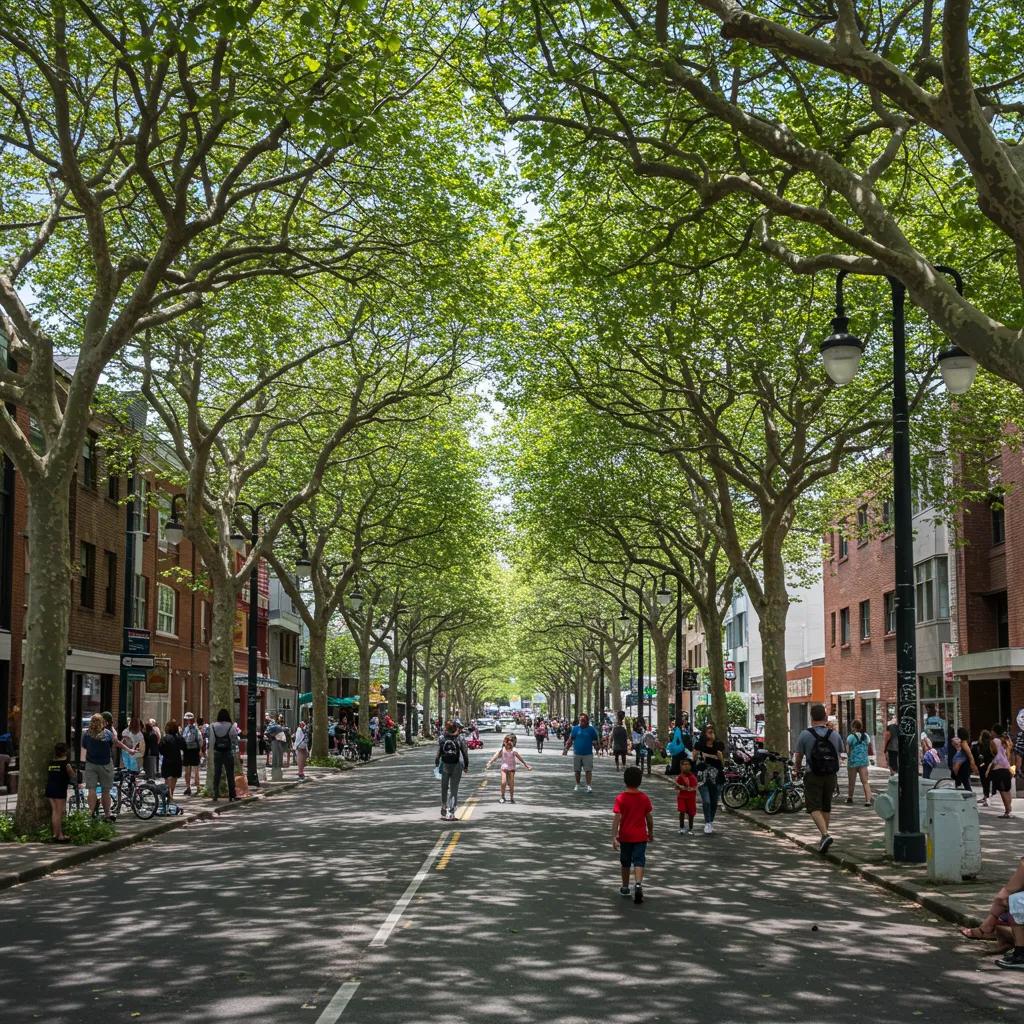
Urban trees reduce greenhouse gases and improve air quality through several mechanisms: direct carbon sequestration into biomass and soil, cooling that lowers energy-related emissions, pollutant deposition on leaf surfaces, and enhanced stormwater management that reduces CO₂-intensive infrastructure needs. Collectively, these mechanisms translate into measurable homeowner outcomes such as lower cooling bills, fewer air-quality related health risks, and reduced local runoff. The next subsections explain each mechanism—urban heat island reduction, pollutant removal, stormwater interception, and biodiversity benefits—and quantify homeowner-relevant effects where possible.
What Role Do Trees Play in Reducing the Urban Heat Island Effect?
Trees reduce the urban heat island effect by providing shade that lowers surface and air temperatures and through evapotranspiration that consumes energy as water vapor moves from leaves into the atmosphere; these processes can reduce daytime temperatures in shaded areas by several degrees. Strategic placement of shade trees near buildings cuts cooling loads, delivering energy savings and associated reductions in electricity-related greenhouse gas emissions. Neighborhood-scale canopy increases multiply these effects across blocks and streets, improving outdoor comfort and public health. Proper selection and placement of shade trees maximize cooling, which we’ll tie to air-quality and water benefits next.
How Do Trees Improve Air Quality in Jacksonville?
Trees improve air quality by capturing particulate matter and some gaseous pollutants on leaf surfaces and by reducing emissions tied to energy use through shading and cooling; however, species selection matters because some trees emit biogenic volatile organic compounds (VOCs) that can affect ozone chemistry. Species that combine high particulate capture with low VOC emissions deliver the best net air-quality benefits for Jacksonville residents. Maintaining healthy canopies that replace lost leaves and avoid heavy pruning sustains pollutant removal capacity over time. Selecting low-VOC, high-capture species ensures air-quality benefits without unintended trade-offs.
Can Trees Help Manage Stormwater and Prevent Flooding?
Trees help manage stormwater by intercepting rainfall on leaves and branches, encouraging infiltration via root systems, and increasing evapotranspiration that returns water to the atmosphere; these processes reduce surface runoff volumes and peak flows that contribute to urban flooding. At the property scale, mulching, preserving soil structure, and planting trees in permeable areas amplify these benefits by increasing water retention and infiltration rates. Integrating trees into green infrastructure—bioswales, rain gardens, and tree-lined streets—multiplies stormwater management benefits at the neighborhood level. Homeowners who design plantings to capture and slow runoff contribute to reduced municipal stormwater burdens.
How Do Healthy Trees Support Local Biodiversity and Climate Resilience?
Healthy trees provide habitat, food resources, and structural diversity that support pollinators, birds, and beneficial insects, which strengthens ecological networks and enhances resilience to pests and climate stress. Diverse species and age structures disperse risk so that a single pest or storm event is less likely to decimate an entire canopy, making mixed plantings a climate-resilient approach. Native species often offer the highest value for local wildlife and are adapted to regional climatic conditions, improving survival and ecological function. Homeowner practices that promote species diversity and connectivity increase both biodiversity and the long-term climate services provided by urban trees.
| Benefit | Mechanism | Typical Homeowner Outcome |
|---|---|---|
| Cooling | Shade + evapotranspiration | Lower AC use and energy bills |
| Air purification | Particulate deposition on leaves | Improved local air quality and health |
| Runoff reduction | Interception + infiltration | Less erosion and reduced stormwater fees |
| Carbon storage | Biomass and soil accumulation | Persistent greenhouse gas removal |
This table links mechanisms to the homeowner outcomes that matter most for climate mitigation and daily life.
Which Trees Are Best for Climate Change Mitigation in Jacksonville?
Selecting trees for Jacksonville requires balancing fast growth for near-term carbon uptake with long-lived species for persistent carbon storage, while considering salt tolerance, storm resilience, native status, and canopy function. The best practice is a mixed approach that combines rapid early sequesterers with durable canopy-forming trees that store carbon for decades. Below we list top native and climate-resilient species for Jacksonville with brief rationales and follow with guidance on trade-offs between fast growers and long-lived trees to help homeowners choose appropriately. A practical checklist afterward helps match species to site constraints.
What Are the Top Native and Climate-Resilient Tree Species for Carbon Capture?
The following species are well-suited to Jacksonville’s climate due to their combination of growth rate, longevity, salt/drought tolerance, and native status. Use this shortlist to prioritize trees that deliver both canopy and resilience.
| Species | Growth Rate / Lifespan | Carbon Sequestration Potential / Tolerance |
|---|---|---|
| Live Oak (Quercus virginiana) | Slow/Long-lived | High long-term storage; salt tolerant |
| Slash Pine (Pinus elliottii) | Fast/Medium-long | Rapid early uptake; fire and drought resilient |
| Southern Magnolia (Magnolia grandiflora) | Medium/Long | Good biomass accumulation; evergreen canopy |
| Red Maple (Acer rubrum) | Fast/Medium | Rapid early growth; adaptable to wet sites |
| Bald Cypress (Taxodium distichum) | Slow/Long-lived | Exceptional resilience in wet soils; long-term storage |
This EAV-style table highlights species traits so homeowners can match trees to yard space, soil, and climate resilience needs.
How Do Fast-Growing vs. Long-Lived Trees Compare for Carbon Storage?
Fast-growing trees capture more carbon per year in early decades, accelerating near-term climate benefits, but they often have shorter lifespans and may require more maintenance or be more susceptible to storm damage. Long-lived trees sequester carbon more slowly initially but accumulate greater total carbon over centuries, offering durable climate mitigation if protected and maintained. A mixed planting strategy—combining fast growers for immediate uptake with long-lived canopy species—optimizes both short-term and long-term sequestration goals. Homeowners should weigh space, maintenance capacity, and risk tolerance when selecting species mixes to balance these trade-offs.
How Can Homeowners Choose Trees That Maximize Climate Benefits?
Homeowners should evaluate available planting space, soil type, proximity to utilities, and desired ecosystem services (shade, stormwater absorption, wildlife habitat) when choosing trees to maximize climate benefits. Prioritize native and climate-resilient species that fit site constraints, and favor mixes of growth rates and lifespans to balance near-term carbon uptake with durable storage. Consider future canopy size to avoid conflicts with infrastructure and select species with known salt or wind tolerance if you are in coastal or storm-prone areas. A simple decision checklist—space, function, maintenance, resilience—helps match species to homeowner goals while maximizing climate outcomes.
- Assess Space: Measure available canopy and root area for mature tree size.
- Match Function: Choose species for shade, stormwater capture, or habitat goals.
- Check Resilience: Select trees with salt, wind, and drought tolerance if needed.
- Plan Maintenance: Ensure capacity for pruning and long-term care.
Following this checklist leads to better survival and stronger climate benefits over the tree’s lifetime.
How Can Homeowners Plant and Care for Trees to Maximize Climate Benefits?
Planting and care determine whether trees live to maturity and deliver climate services over decades; proper planting, mulching, watering, pruning, and soil care directly influence survival, growth rate, and carbon accumulation. Homeowners can significantly increase a tree’s sequestration potential by following best-practice planting steps, scheduling regular maintenance, and seeking professional assessments when problems arise. The subsections below give step-by-step planting guidance, explain how pruning and health assessments support climate goals, offer sustainable care tips, and describe the role of emergency tree services in limiting carbon loss after storms.
What Are the Best Practices for Planting Trees for Carbon Sequestration?
Planting best practices increase survival and early growth, creating the foundation for strong carbon uptake and long-term storage. Start by selecting the right species for site conditions, dig a hole no deeper than the root ball and two to three times as wide, and avoid planting too deeply to prevent root suffocation. Apply a 2–4 inch mulch ring leaving a collar around the trunk, set an initial watering schedule that keeps soil moist but not waterlogged, and avoid over-fertilization that can stress young roots. Proper planting ensures trees allocate energy to trunk and root development, increasing future biomass and soil carbon contributions.
How Does Tree Pruning and Health Assessment Support Climate Goals?
Regular pruning and professional health assessments increase a tree’s lifespan and structural integrity, reducing risk of failure and preserving biomass that would otherwise be lost to storm damage or disease. Assessments identify structural defects, pest or disease pressure, root issues, and soil problems that limit growth, enabling targeted interventions that restore vigor and growth rate. Correct pruning techniques remove deadwood and improve form while preserving leaf area critical for photosynthesis and carbon uptake. Professional assessment and pruning therefore translate directly into higher cumulative sequestration over a tree’s life.
When homeowners want professional support, services such as Tree Health Assessments and Tree Trimming & Pruning provide actionable diagnostics and corrective care to maximize carbon sequestration and tree longevity.
What Are Sustainable Tree Care Tips to Enhance Tree Vitality and Carbon Storage?
Sustainable care practices—correct mulching, minimizing soil compaction, using native species, and applying integrated pest management—support long-term tree health and maximize carbon storage without heavy chemical inputs. Mulch conserves soil moisture and moderates temperature, while avoiding piles against trunks prevents rot and pest issues; limiting lawn compaction around roots increases oxygen and water infiltration for root growth. Use efficient irrigation techniques during establishment and prioritize soil-building practices (compost, organic amendments) to boost soil organic carbon. These low-impact steps promote resilient trees that sequester more carbon across decades.
How Does Emergency Tree Service Contribute to Responsible Climate Action?
Emergency tree service plays a critical role after storms by triaging damaged trees to preserve salvageable specimens, safely removing hazardous trees, and reducing secondary damage that would necessitate more extensive removals and emissions. Rapid response can save partially damaged trees through pruning and stabilization, preserving biomass and future sequestration potential while protecting people and property. For situations requiring removal, emergency crews can recommend reuse options for woody debris to reduce net carbon loss and promote beneficial reuse. Keeping emergency planning in place supports both public safety and the climate value of urban trees.
What Local Initiatives and Programs Support Tree Planting and Climate Action in Jacksonville?
Local initiatives and programs enable neighborhood-scale canopy growth through organized plantings, volunteer opportunities, technical assistance, and policy-driven incentives that make tree planting accessible and impactful for homeowners. Residents can often find community planting events, school projects, and neighborhood grants or programs to help cover costs and coordinate volunteers. Participating in these programs leverages municipal resources and multiplies the climate benefit of individual plantings by integrating them into larger canopy goals. The next subsections explain how to participate, how local services can support efforts, and where policy support can be found.
How Can Jacksonville Residents Participate in Tree Planting Programs?
Residents can join local planting events, register for neighborhood planting days, or coordinate small community projects with neighbors or local nonprofits to increase canopy coverage and shared stewardship. Typical participation steps include signing up for events, attending volunteer training or briefings, and preparing planting sites in advance by clearing invasive species and ensuring water access. Volunteers should expect guidance on proper planting and post-planting care responsibilities to ensure tree survival rates. Engaging in community programs amplifies homeowner action by connecting plantings to broader urban forestry targets.
What Role Does Jacksonville Tree Service Play in Supporting Climate Mitigation?
Jacksonville Tree Service (also referred to as TreeLine) supports local climate mitigation by providing professional services—Tree Health Assessments, Tree Trimming & Pruning, and Emergency Tree Service—that increase tree longevity and maximize carbon sequestration when homeowners need expertise. Their assessments diagnose structural or health issues, enabling interventions that preserve biomass and enhance growth, while professional trimming maintains canopy function and safety with best-practice techniques. The company’s availability for emergency response helps salvage trees after storms and reduce net carbon loss, and they offer Free Quotes to help homeowners plan climate-smart plantings. These services complement volunteer and municipal programs by turning planting into long-term canopy success.
How Are Local Policies Encouraging Urban Forestry and Climate Resilience?
Local policies often encourage urban forestry through canopy targets, tree protection ordinances, planting incentives, and stormwater management programs that recognize trees as green infrastructure. These policy levers can provide grants, technical assistance, or regulatory frameworks that make tree planting and preservation more attractive and feasible for homeowners and developers. Homeowners should consult local municipal resources to learn about available programs, permit requirements, and incentive structures that affect planting and removal decisions. Aligning private plantings with municipal goals maximizes both neighborhood resilience and regional climate outcomes.
What Are Common Questions About Trees and Climate Change Mitigation?
Homeowners frequently ask concise, practical questions about carbon uptake, effectiveness, measurement, and economics; this section gives direct answers to those core concerns to support informed action and local planning. Clear estimates, measurement approaches, and economic trade-off framing help homeowners set realistic expectations and prioritize high-impact interventions. The following Q&A addresses the most common homeowner queries with short, actionable answers.
How Much Carbon Does a Mature Tree Absorb Annually?
A commonly cited estimate is that a mature tree absorbs roughly 22 kg of CO₂ per year on average, though actual uptake varies widely with species, size, age, and site conditions. Fast-growing species in favorable soils can sequester substantially more in early years, while large, long-lived trees accumulate greater total carbon over decades. Homeowners should treat per-tree estimates as approximations and focus on planting trees that will survive and grow to maturity to maximize lifetime sequestration. When precise accounting is needed, professional Tree Health Assessments or canopy studies provide better localized estimates.
Do Urban Trees Really Help Reduce Global Warming?
Urban trees contribute measurably to local and regional climate regulation—through sequestration, cooling, and emissions reductions from lowered energy use—but they are only one component of broader mitigation strategies required to address global greenhouse gas emissions. While a single city’s canopy cannot substitute for large-scale decarbonization, urban forestry delivers immediate co-benefits (heat relief, air quality, stormwater management) that improve resilience and public health. Protecting and expanding canopy while reducing fossil fuel emissions provides the combined approach needed for meaningful climate progress. Therefore, planting trees is a pragmatic local action that complements systemic emissions reductions.
How Can I Measure the Climate Benefits of Trees on My Property?
Homeowners can estimate climate benefits using online tree carbon calculators, energy-savings estimators for shade trees, and canopy mapping tools; these give first-order approximations but vary in accuracy based on input assumptions. For higher-confidence results, commissioning a professional Tree Health Assessment or a canopy study yields site-specific data on biomass, growth rates, and carbon stocks. Measuring cumulative benefits also involves tracking energy bills before and after plantings and monitoring tree health and growth over time. Combining simple calculators with periodic professional assessments gives the best balance of accessibility and accuracy.
What Are the Economic Benefits of Planting Trees for Climate?
Planting trees yields economic co-benefits including lower energy bills from reduced cooling demand, increased property values associated with mature canopy, and avoided public costs for stormwater infrastructure and heat-related health impacts. Quantifying these benefits depends on local energy prices, home orientation, and species selection; however, studies commonly show significant lifetime returns through energy savings and increased curb appeal. Homeowners should frame tree plantings as long-term investments that deliver both direct household savings and broader community cost reductions. Considering these economic benefits alongside ecological values strengthens the case for canopy investments.
How Does Jacksonville Tree Service Ensure Healthy Trees for Maximum Climate Impact?
Jacksonville Tree Service describes professional processes that preserve and extend tree life—Tree Health Assessments, targeted pruning, and rapid emergency response—that collectively support greater carbon storage, canopy function, and community safety. Professional assessments identify issues that limit growth and sequestration potential and produce care plans focused on preservation and resilience. Skilled pruning improves structure and prolongs productive foliage area, while 24-hour emergency service helps salvage trees after storms and reduce long-term carbon loss. The following subsections detail what assessments include, how trimming enhances sequestration, why ISA certification matters, and the role of 24-hour emergency coverage.
What Is Included in a Tree Health Assessment for Climate Resilience?
A Tree Health Assessment typically inspects structural integrity, crown condition, signs of pests or disease, root health, and soil conditions, producing prioritized recommendations for pruning, treatments, or preservation. Assessors evaluate risk factors that could lead to early failure and estimate a tree’s remaining productive lifespan, guiding interventions that protect existing carbon stores and promote future sequestration. Findings translate into care plans that may include targeted pruning, soil improvement, watering strategies, or monitored treatment for pests and pathogens to restore vigor. Assessments therefore inform decisions about whether to conserve, treat, or remove trees in a way that maximizes climate and safety outcomes.
How Does Professional Tree Trimming Enhance Carbon Sequestration?
Professional trimming enhances sequestration by improving structural form, removing dead or diseased wood that drains resources, and correcting growth patterns that otherwise reduce photosynthetic efficiency or increase failure risk. Proper pruning preserves leaf area while eliminating hazards, enabling trees to allocate resources toward healthy growth rather than decay or repair. Trained arborists use techniques that foster strong branch attachments and balance canopy architecture, which reduces storm-related losses and sustains long-term biomass accumulation. In contrast, improper pruning can reduce leaf area and slow growth, so professional care is an investment in a tree’s carbon productivity.
Why Choose ISA Certified Arborists for Sustainable Tree Care?
ISA Certified arborists bring standardized, research-based practices to tree care that prioritize tree health, safety, and long-term outcomes, ensuring interventions align with best-practice methods that preserve carbon stores and canopy function. Certification signals expertise in species-specific biology, structural pruning techniques, and risk assessment, reducing the likelihood of harmful practices that shorten tree lifespan. Choosing certified and insured professionals supports both safe work and resilient trees that contribute more effectively to climate mitigation over time. Credentialed care therefore aligns homeowner stewardship with durable environmental benefits.
How Does 24-Hour Emergency Tree Service Support Community Safety and Climate Goals?
A 24-hour emergency tree service provides rapid response after storms or hazardous tree failures to quickly stabilize or remove dangerous trees, preserving salvageable biomass where possible and minimizing collateral damage that would otherwise force wider removals. Prompt intervention can save partially damaged trees, maintain neighborhood canopy cover, and reduce the net loss of stored carbon by enabling targeted recovery rather than wholesale removal. Emergency services also protect people and property, reducing secondary emissions or losses associated with repair and cleanup. Having access to round-the-clock response balances safety with climate-minded stewardship and community resilience.
What Local Initiatives and Programs Support Tree Planting and Climate Action in Jacksonville?
Local initiatives and programs enable neighborhood-scale canopy growth through organized plantings, volunteer opportunities, technical assistance, and policy-driven incentives that make tree planting accessible and impactful for homeowners. Residents can often find community planting events, school projects, and neighborhood grants or programs to help cover costs and coordinate volunteers. Participating in these programs leverages municipal resources and multiplies the climate benefit of individual plantings by integrating them into larger canopy goals. The next subsections explain how to participate, how local services can support efforts, and where policy support can be found.
How Can Jacksonville Residents Participate in Tree Planting Programs?
Residents can join local planting events, register for neighborhood planting days, or coordinate small community projects with neighbors or local nonprofits to increase canopy coverage and shared stewardship. Typical participation steps include signing up for events, attending volunteer training or briefings, and preparing planting sites in advance by clearing invasive species and ensuring water access. Volunteers should expect guidance on proper planting and post-planting care responsibilities to ensure tree survival rates. Engaging in community programs amplifies homeowner action by connecting plantings to broader urban forestry targets.
What Role Does Jacksonville Tree Service Play in Supporting Climate Mitigation?
Jacksonville Tree Service (also referred to as TreeLine) supports local climate mitigation by providing professional services—Tree Health Assessments, Tree Trimming & Pruning, and Emergency Tree Service—that increase tree longevity and maximize carbon sequestration when homeowners need expertise. Their assessments diagnose structural or health issues, enabling interventions that preserve biomass and enhance growth, while professional trimming maintains canopy function and safety with best-practice techniques. The company’s availability for emergency response helps salvage trees after storms and reduce net carbon loss, and they offer Free Quotes to help homeowners plan climate-smart plantings. These services complement volunteer and municipal programs by turning planting into long-term canopy success.
How Are Local Policies Encouraging Urban Forestry and Climate Resilience?
Local policies often encourage urban forestry through canopy targets, tree protection ordinances, planting incentives, and stormwater management programs that recognize trees as green infrastructure. These policy levers can provide grants, technical assistance, or regulatory frameworks that make tree planting and preservation more attractive and feasible for homeowners and developers. Homeowners should consult local municipal resources to learn about available programs, permit requirements, and incentive structures that affect planting and removal decisions. Aligning private plantings with municipal goals maximizes both neighborhood resilience and regional climate outcomes.
What Are Common Questions About Trees and Climate Change Mitigation?
Homeowners frequently ask concise, practical questions about carbon uptake, effectiveness, measurement, and economics; this section gives direct answers to those core concerns to support informed action and local planning. Clear estimates, measurement approaches, and economic trade-off framing help homeowners set realistic expectations and prioritize high-impact interventions. The following Q&A addresses the most common homeowner queries with short, actionable answers.
How Much Carbon Does a Mature Tree Absorb Annually?
A commonly cited estimate is that a mature tree absorbs roughly 22 kg of CO₂ per year on average, though actual uptake varies widely with species, size, age, and site conditions. Fast-growing species in favorable soils can sequester substantially more in early years, while large, long-lived trees accumulate greater total carbon over decades. Homeowners should treat per-tree estimates as approximations and focus on planting trees that will survive and grow to maturity to maximize lifetime sequestration. When precise accounting is needed, professional Tree Health Assessments or canopy studies provide better localized estimates.
Do Urban Trees Really Help Reduce Global Warming?
Urban trees contribute measurably to local and regional climate regulation—through sequestration, cooling, and emissions reductions from lowered energy use—but they are only one component of broader mitigation strategies required to address global greenhouse gas emissions. While a single city’s canopy cannot substitute for large-scale decarbonization, urban forestry delivers immediate co-benefits (heat relief, air quality, stormwater management) that improve resilience and public health. Protecting and expanding canopy while reducing fossil fuel emissions provides the combined approach needed for meaningful climate progress. Therefore, planting trees is a pragmatic local action that complements systemic emissions reductions.
How Can I Measure the Climate Benefits of Trees on My Property?
Homeowners can estimate climate benefits using online tree carbon calculators, energy-savings estimators for shade trees, and canopy mapping tools; these give first-order approximations but vary in accuracy based on input assumptions. For higher-confidence results, commissioning a professional Tree Health Assessment or a canopy study yields site-specific data on biomass, growth rates, and carbon stocks. Measuring cumulative benefits also involves tracking energy bills before and after plantings and monitoring tree health and growth over time. Combining simple calculators with periodic professional assessments gives the best balance of accessibility and accuracy.
What Are the Economic Benefits of Planting Trees for Climate?
Planting trees yields economic co-benefits including lower energy bills from reduced cooling demand, increased property values associated with mature canopy, and avoided public costs for stormwater infrastructure and heat-related health impacts. Quantifying these benefits depends on local energy prices, home orientation, and species selection; however, studies commonly show significant lifetime returns through energy savings and increased curb appeal. Homeowners should frame tree plantings as long-term investments that deliver both direct household savings and broader community cost reductions. Considering these economic benefits alongside ecological values strengthens the case for canopy investments.
How Does Jacksonville Tree Service Ensure Healthy Trees for Maximum Climate Impact?
Jacksonville Tree Service describes professional processes that preserve and extend tree life—Tree Health Assessments, targeted pruning, and rapid emergency response—that collectively support greater carbon storage, canopy function, and community safety. Professional assessments identify issues that limit growth and sequestration potential and produce care plans focused on preservation and resilience. Skilled pruning improves structure and prolongs productive foliage area, while 24-hour emergency service helps salvage trees after storms and reduce long-term carbon loss. The following subsections detail what assessments include, how trimming enhances sequestration, why ISA certification matters, and the role of 24-hour emergency coverage.
What Is Included in a Tree Health Assessment for Climate Resilience?
A Tree Health Assessment typically inspects structural integrity, crown condition, signs of pests or disease, root health, and soil conditions, producing prioritized recommendations for pruning, treatments, or preservation. Assessors evaluate risk factors that could lead to early failure and estimate a tree’s remaining productive lifespan, guiding interventions that protect existing carbon stores and promote future sequestration. Findings translate into care plans that may include targeted pruning, soil improvement, watering strategies, or monitored treatment for pests and pathogens to restore vigor. Assessments therefore inform decisions about whether to conserve, treat, or remove trees in a way that maximizes climate and safety outcomes.
How Does Professional Tree Trimming Enhance Carbon Sequestration?
Professional trimming enhances sequestration by improving structural form, removing dead or diseased wood that drains resources, and correcting growth patterns that otherwise reduce photosynthetic efficiency or increase failure risk. Proper pruning preserves leaf area while eliminating hazards, enabling trees to allocate resources toward healthy growth rather than decay or repair. Trained arborists use techniques that foster strong branch attachments and balance canopy architecture, which reduces storm-related losses and sustains long-term biomass accumulation. In contrast, improper pruning can reduce leaf area and slow growth, so professional care is an investment in a tree’s carbon productivity.
Why Choose ISA Certified Arborists for Sustainable Tree Care?
ISA Certified arborists bring standardized, research-based practices to tree care that prioritize tree health, safety, and long-term outcomes, ensuring interventions align with best-practice methods that preserve carbon stores and canopy function. Certification signals expertise in species-specific biology, structural pruning techniques, and risk assessment, reducing the likelihood of harmful practices that shorten tree lifespan. Choosing certified and insured professionals supports both safe work and resilient trees that contribute more effectively to climate mitigation over time. Credentialed care therefore aligns homeowner stewardship with durable environmental benefits.
How Does 24-Hour Emergency Tree Service Support Community Safety and Climate Goals?
A 24-hour emergency tree service provides rapid response after storms or hazardous tree failures to quickly stabilize or remove dangerous trees, preserving salvageable biomass where possible and minimizing collateral damage that would otherwise force wider removals. Prompt intervention can save partially damaged trees, maintain neighborhood canopy cover, and reduce the net loss of stored carbon by enabling targeted recovery rather than wholesale removal. Emergency services also protect people and property, reducing secondary emissions or losses associated with repair and cleanup. Having access to round-the-clock response balances safety with climate-minded stewardship and community resilience.