
Improve Air Quality: How Trees Combat Air Pollution
How Trees Improve Air Quality Near You: A Homeowner’s Guide to Cleaner, Healthier Air
Trees improve air quality by removing gases and particles while cooling neighborhoods and supporting healthier microclimates, making them a powerful, natural tool for Jacksonville homeowners seeking cleaner, healthier air. This guide explains the mechanisms—photosynthesis for CO₂ uptake, leaf and bark deposition of particulate matter (PM₂.₅), biogenic VOC dynamics, and urban heat island mitigation—and shows how species selection, planting locations, and maintenance influence outcomes. Many homeowners face concerns about traffic pollution, ozone episodes, and seasonal allergens; by understanding which trees work best and how proper care preserves their benefits, residents can make evidence-based choices for yard and street planting. The article maps the key ways trees improve air quality, recommends Jacksonville-appropriate species and low-VOC considerations, quantifies carbon sequestration, details maintenance practices that sustain air-purifying function, identifies common local pollutants and health links, and outlines actionable tree service steps homeowners can take to maximize air-quality benefits.
What Are the Key Ways Trees Improve Air Quality?
Trees improve air quality through four main mechanisms: they sequester carbon dioxide via photosynthesis, capture particulate matter on leaves and bark, uptake or transform volatile organic compounds, and lower local temperatures through shade and evapotranspiration which reduces ozone formation. These mechanisms work together so that an urban forest delivers multiple co-benefits—less CO₂, fewer airborne particles, and reduced ozone exposure—resulting in measurable improvements in neighborhood air. Understanding these mechanisms helps homeowners prioritize planting locations, choose species that balance pollutant uptake and VOC emissions, and time maintenance to maximize leaf area and canopy health.
The following list summarizes the primary mechanisms and sets up species- and service-level decisions described in later sections.
- CO₂ uptake (photosynthesis): Leaves convert atmospheric CO₂ into biomass, lowering local greenhouse gas concentrations.
- Particulate capture: Leaves and bark intercept PM₂.₅ and larger particles, removing them from the air column.
- VOC interactions: Trees can emit or absorb biogenic volatile organic compounds, influencing ground-level ozone chemistry.
- Microclimate cooling: Shade and evapotranspiration lower surface temperatures and reduce ozone formation.
These mechanisms inform species selection and placement choices because the effectiveness of each process varies by tree type, canopy density, and site context. Recognizing how deposition, uptake, and cooling interplay prepares homeowners to choose trees that maximize air-quality outcomes for roadsides, yards, and community spaces.
How Do Trees Absorb Carbon Dioxide and Release Oxygen?
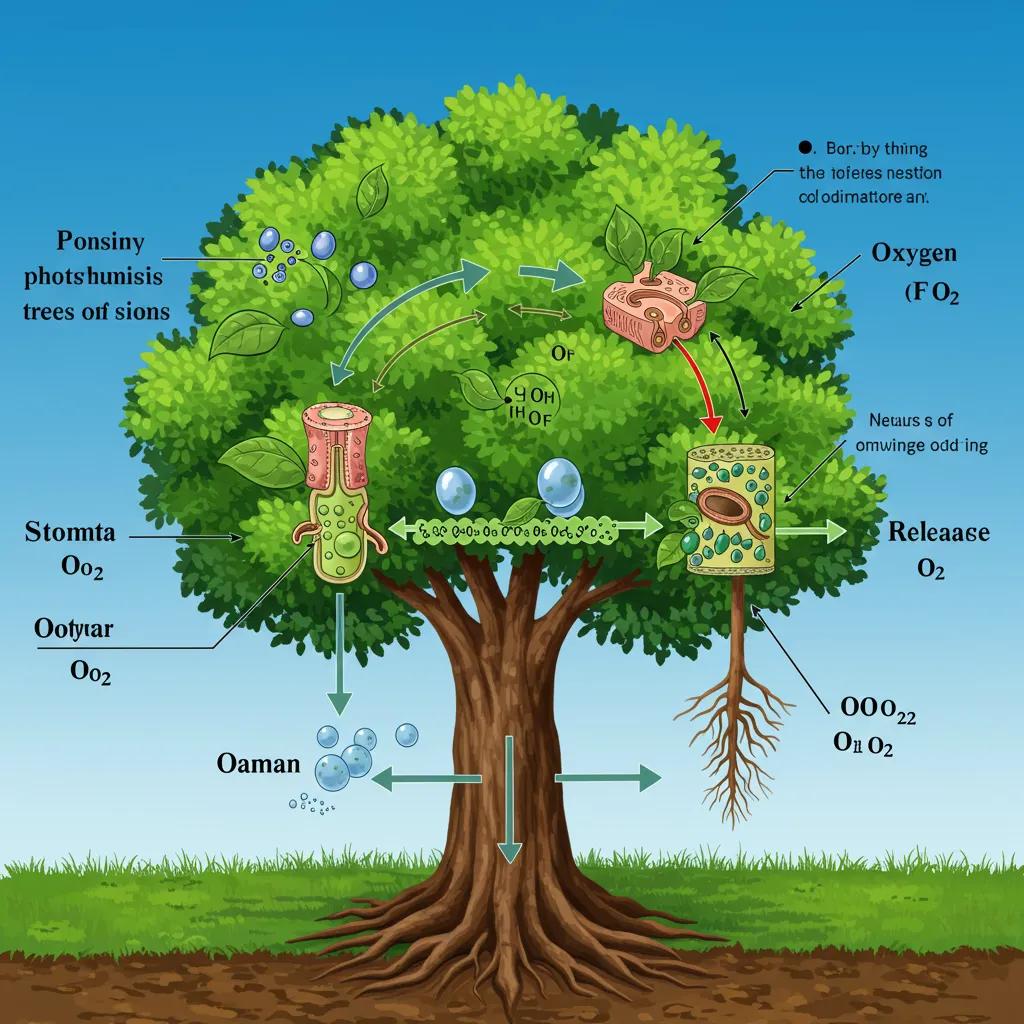
Photosynthesis is the biochemical process by which trees absorb carbon dioxide and release oxygen: leaves capture CO₂ through stomata, convert it to sugars in chloroplasts, and store carbon in woody tissues while releasing O₂ as a byproduct. This mechanism is the primary way trees reduce atmospheric CO₂ at the local scale, and the rate depends on species, leaf area, and tree health; larger canopies and vigorous growth produce greater ongoing CO₂ uptake. For homeowners, the practical implication is that mature, well-located trees with high leaf area index deliver the most sequestration per individual, and grouping trees to form continuous canopy increases neighborhood-level benefits. Understanding photosynthesis’s central role leads naturally to quantifying how much CO₂ a single tree can absorb annually and how cumulative planting scales to community impact.
In What Ways Do Trees Filter Particulate Matter and Pollutants?
Leaves, needles, and bark act as physical filters that intercept airborne particulate matter (PM₂.₅ and coarser fractions), with deposition rates influenced by leaf surface roughness, canopy density, and wind conditions near emission sources. Trees positioned between traffic corridors and homes form effective vegetative barriers by capturing particles before they enter living areas; denser, rougher-leafed species generally capture more particulates than smooth-leafed species. For homeowners, planting belts or staggered rows near busy streets and maintaining canopy health to preserve leaf area will maximize particulate removal and reduce exposure for children and seniors. Considering particulate interception mechanics prepares property owners to select species and placements that prioritize PM reduction while balancing other site constraints.
Tree Species Variation in Capturing and Retaining Airborne PM2.5
Human health risks caused by PM2.5raise awareness to the role of trees as bio-filters of urban air pollution, but not all species are equally capable of filtering the air. The objectives of this current study were: (1) to determine the foliar traits for effective PM2.5-capture and (2) explore species-to-species differences in foliar PM2.5-recapture capacity following a rain event. The study concluded that overall, the acicular needle shape made conifers more efficient with PM2.5accumulation and post-rainfall recapture than broadleaved species. The foliar shape and venation of broadleaved species did not appear to influence the PM2.5accumulation. However, the number of the grooves and trichomes of broadleaved species were positively related to foliar PM2.5accumulation, suggesting that they could be used as indicators for the effectiveness of tree PM2.5capture. Furthermore, the amount of PM2.5removal by rainfall was determined by the total foliar PM2.5. Not all PM2.5remained on the foliage. In some species, PM2.5was resuspended during the growing season, and thus reduced the net particular accumulation for that species. These findings contribute to a better understanding of tree species potential for reducing PM2.5in urban environments.
Research indicates that leaf characteristics like needle shape, grooves, and trichomes significantly influence a tree’s ability to capture and retain particulate matter.
How Do Trees Help Reduce Urban Heat Island Effects and Ozone Formation?
Trees cool neighborhoods through shade and evapotranspiration, lowering surface and air temperatures and thereby reducing temperature-driven ozone formation and energy demand from air conditioning. Cooler local temperatures slow the photochemical reactions that convert precursor pollutants into ground-level ozone, so strategic tree planting near heat-absorbing surfaces yields indirect air-quality improvements. For homeowners, planting shade trees to protect west- and south-facing walls and pavements provides both energy savings and reduced ozone exposure during hot months. Recognizing the link between temperature, ozone chemistry, and energy use clarifies why tree placement and canopy maturity are critical to maximizing air-quality co-benefits.
Which Trees Are Best for Air Purification in Jacksonville and Nearby Areas?
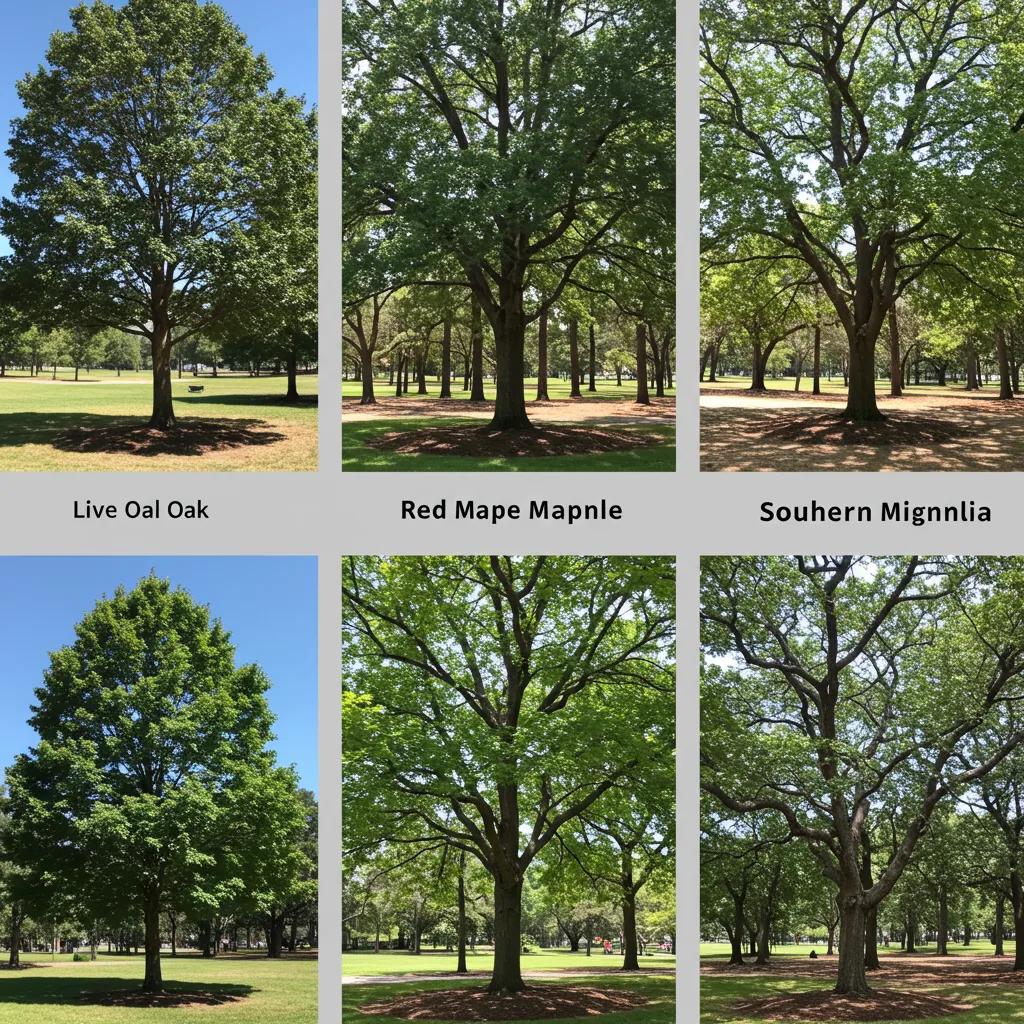
Choosing trees for Jacksonville requires balancing pollutant removal capacity, low biogenic VOC emissions, salt tolerance, and maintenance needs suitable for Florida’s climate; native and climate-adapted species often offer the best long-term performance. Trees with large, dense canopies and rough leaf surfaces tend to capture more particulate matter, while evergreen conifers provide year-round foliage for continuous interception. Tradeoffs include root behavior, litter management, and growth rate—faster-growing species may sequester carbon quickly but require more pruning over time. The following species comparison table helps homeowners weigh pollutant filtration strengths, VOC emission potential, site suitability, and maintenance considerations for common Jacksonville-appropriate trees.
| Species (Common / Scientific) | Particulate Capture | VOC Emission | Suitability for Jacksonville | Maintenance Notes |
|---|---|---|---|---|
| Live Oak (Quercus virginiana) | High | Low | High (native, salt-tolerant) | Long-lived, moderate pruning |
| Red Maple (Acer rubrum) | Medium-High | Medium | High (adaptable) | Faster growth, seasonal litter |
| Eastern White Pine (Pinus strobus) | Medium | Low | Medium (best in protected sites) | Evergreen interception, needle litter |
| Southern Magnolia (Magnolia grandiflora) | High | Low-Medium | High (urban tolerant) | Dense canopy, requires spacing |
| Cabbage Palmetto (Sabal palmetto) | Low-Medium | Low | High (native palm) | Low maintenance, limited canopy area |
This comparison shows that large-canopy hardwoods like Live Oak and Southern Magnolia excel at particulate capture while maintaining low VOC profiles, making them strong choices for Jacksonville yards and street plantings. Selecting species that match soil, space, and maintenance capacity will maximize air-quality outcomes and reduce future management burdens.
After recommending species and placement, homeowners sometimes want professional planting or species-selection guidance that ensures proper root zone preparation and early-care survivorship. Jacksonville Tree Service offers species selection and planting guidance provided by ISA Certified arborists and can assist homeowners who prefer professional installation and planning to optimize survival and canopy development. Working with trained arborists increases the chance that selected trees establish quickly and provide air-quality benefits sooner.
What Native Tree Species Are Most Effective at Filtering Air Pollutants?
Native species tend to balance resilience and ecological fit with pollutant-filtering function, and several Florida natives deliver strong particulate capture while supporting local biodiversity and lower maintenance needs. Live Oak and Southern Magnolia, for example, form dense canopies with rough leaf surfaces that trap more particulate matter compared with thin-leaved species, and native palms provide windbreak functions in coastal settings. Choosing natives reduces irrigation and pest-management requirements while improving long-term canopy stability in Jacksonville’s etmektedir. Considering native resilience alongside filtration capacity helps homeowners make planting choices that last and require less intervention.
How Do Low-VOC Emitting Trees Contribute to Cleaner Air?
Biogenic volatile organic compounds (VOCs) emitted by some species can participate in ozone formation when mixed with NOx under sunlight; therefore selecting low-VOC emitters in ozone-prone urban areas reduces the risk of increasing local ozone levels. Low-VOC species include many oaks, pines, and magnolias and generally produce fewer reactive hydrocarbons compared with high-emitting species like some eucalyptus and certain ornamentals.
Designing Vegetation Barriers for Urban Air Pollution Abatement: Plant Selection for PM and VOCs
For super-micrometre particles, advantageous leaf micromorphological traits include the presence of trichomes and ridges or grooves. Stomatal characteristics are more significant for sub-micrometre particle and gaseous pollutant uptake, although we found a comparative dearth of studies into such pollutants. Generally advantageous macromorphological traits include small leaf size and high leaf complexity, but optimal vegetation height, form and density depend on planting configuration with respect to the immediate physical environment. Biogenic volatile organic compound and pollen emissions can be minimised by appropriate species selection, although their significance varies with scale and context.
When designing vegetation barriers, selecting plants with specific leaf micromorphological traits and considering their biogenic volatile organic compound emissions are crucial for effective urban air pollution abatement.
For homeowners, prioritizing low-VOC species near busy roads and densely built areas minimizes unintended ozone chemistry while preserving particulate-capture benefits. Recognizing the VOC tradeoff ensures planting choices support net air-quality improvement rather than localized ozone spikes.
What Are the Benefits of Planting Live Oak, Red Maple, and Eastern White Pine?
Live Oak offers a broad, long-lived canopy with exceptional particulate capture and low VOC emissions, making it ideal for sustained neighborhood air-quality improvement and shade. Red Maple grows quickly to provide earlier canopy cover and carbon uptake, which benefits homeowners seeking faster air-quality and aesthetic returns but requires more seasonal litter management. Eastern White Pine, as an evergreen conifer, provides year-round foliage for continuous interception of particles and can serve as a windbreak or screening species where appropriate. Each species presents a different balance of sequestration, year-round interception, growth rate, and maintenance, so combining species in a planting plan often yields the best overall air-quality and landscape outcomes.
How Does Carbon Sequestration by Trees Help Improve Local Air Quality?
Carbon sequestration by trees reduces atmospheric CO₂ concentrations locally and contributes to broader climate mitigation, which indirectly benefits air quality by lowering combustion-driven emissions and associated pollutants over time. Sequestration refers to the annual uptake of CO₂ via photosynthesis, while carbon storage denotes the cumulative carbon held in wood, roots, and soil; both are important for long-term benefits. For homeowners, understanding typical sequestration rates allows realistic expectations for individual trees compared with citywide canopy goals.
Below is an estimated sequestration table by tree maturity class:
| Tree Maturity Class | Annual CO₂ Absorbed (approx.) | Lifetime Carbon Stored (approx.) |
|---|---|---|
| Young (0–10 years) | 10–25 lbs/year | 100–250 lbs over early life |
| Mature (10–50 years) | 48–200 lbs/year | Several tons over lifetime |
| Veteran (50+ years) | 100–450+ lbs/year | 5–20+ tons depending on species |
This table shows that sequestration increases substantially with maturity and that protecting mature trees contributes disproportionately to lifetime carbon storage. For Jacksonville homeowners, investing in long-lived, well-maintained trees yields the greatest cumulative carbon benefits and sustained local air-quality co-benefits through larger canopy and continuous particulate interception.
How Much Carbon Dioxide Can a Mature Tree Absorb Annually?
A commonly cited estimate is that a mature tree absorbs roughly 48 pounds (about 22 kilograms) of CO₂ per year on average, though actual uptake ranges widely by species, size, and growing conditions. Faster-growing species in favorable urban settings may sequester more annually during peak growth phases, while mature slow-growing hardwoods store substantial cumulative carbon over decades. Homeowners should treat single-tree figures as illustrative and focus on planting appropriate mixes and preserving canopy cover to maximize neighborhood-level sequestration. Understanding these variations directly informs decisions about species mixes and the value of protecting mature specimens.
What Role Do Urban Forests Play in Reducing Jacksonville’s Carbon Footprint?
Urban forests scale individual-tree sequestration into community-level carbon storage and emission reductions by combining direct CO₂ uptake with energy savings from shade that reduce fossil-fuel combustion for cooling. Increased canopy cover across neighborhoods lowers building energy demand, which reduces combustion emissions and complements direct sequestration benefits. Citywide planning that preserves and expands canopy can therefore produce measurable impacts on local greenhouse gas inventories and improve air quality indirectly through lower emissions. Framing tree planting as both sequestration and demand-reduction strategy makes it a practical tool for homeowners and municipalities pursuing climate and air-quality goals.
How Does Carbon Storage by Trees Support Climate Change Mitigation?
Carbon storage in durable woody biomass offers long-term permanence, but permanence depends on tree longevity and management—removal, disease, or poor stewardship can release stored carbon back to the atmosphere. Practices that maximize storage include protecting mature trees, selecting long-lived species, and avoiding frequent removal; in urban contexts, healthy trees with proper maintenance store carbon effectively for decades. Homeowners and communities that prioritize long-term canopy health thus contribute meaningfully to mitigation while reaping immediate air-quality co-benefits. Recognizing the lifecycle of stored carbon highlights the importance of care and planning to preserve sequestration gains over time.
How Can Proper Tree Maintenance Enhance Air Quality Benefits?
Routine maintenance preserves leaf area, structural integrity, and overall tree health, which directly sustains pollutant-removal capacity and prolongs the carbon-storage function of urban trees. Pruning, health assessments, and stump removal when necessary prevent disease spread, restore canopy effectiveness, and enable successful replanting after removals. Service-focused actions translate into measurable outcomes: well-pruned canopies maintain interception surfaces; health assessments detect issues before tree decline reduces uptake; stump grinding facilitates new plantings that restore or improve canopy cover.
The table below links specific services to the air-quality mechanisms they improve so homeowners can prioritize interventions that sustain benefits.
| Service | Air-Quality Mechanism Improved | Expected Outcome |
|---|---|---|
| Tree health assessment | Maintains canopy productivity | Early disease detection preserves CO₂ uptake |
| Pruning and trimming | Restores leaf area and structure | Improved particulate capture and reduced hazards |
| Stump grinding / root removal | Enables successful replanting | Quicker restoration of canopy and sequestration |
Intervening with appropriate services helps prevent declines that would otherwise diminish pollutant removal and carbon storage, so proactive maintenance is an investment in sustained local air quality and tree longevity.
Why Are Tree Health Assessments Crucial for Air-Purifying Trees?
Tree health assessments diagnose soil conditions, pest pressures, structural defects, and nutrient needs that affect a tree’s capacity to photosynthesize and intercept pollutants; when health declines, CO₂ uptake and particulate filtration fall as leaf area and vigor are lost. Regular assessments identify treatable stresses early, allowing targeted treatments that restore canopy function and extend a tree’s productive life. Homeowners should watch for subtle signs—declining leaf density, dieback, or abnormal leaf coloration—and schedule professional evaluations to avoid irreversible decline. Identifying health issues early keeps trees functioning at high air-purifying capacity and reduces the need for emergency removals that temporarily reduce canopy benefits.
How Does Tree Pruning and Trimming Improve Pollutant Filtration?
Correct pruning maintains an optimal canopy structure that maximizes leaf area while removing dead or crowded branches that reduce overall photosynthetic efficiency and create disease risk. Healthy, well-shaped canopies intercept more particles and present greater cumulative stomatal area for gas exchange, increasing both particulate capture and CO₂ uptake. In Jacksonville’s climate, timing pruning to avoid peak storm seasons and using best-practice cuts reduces stress and risk, preserving long-term filtration benefits. Proper pruning also reduces future storm damage and the likelihood of emergency removals, which protects neighborhood canopy cover and sustained air-quality services.
Impact of PM2.5 on Plant Photosynthesis and Stomatal Conductance
The effects of particles on the photosynthesis of vegetation, which is a sink for fine particulate matter (PM2.5) deposition, are still not well understood. Here, we carried out indoor measurements to evaluate the variation dynamics of net photosynthetic rate and stomatal conductance of four plant species with different leaf characteristics under different PM2.5levels. Then tree leaves were sampled and the groove proportion, leaf trichome density, stomatal density and stomatal size were quantitatively studied by scanning electron microscopy (SEM). The stomatal conductance of the 4 species had a close positive correlation with photosynthetic rate. Net photosynthetic rate and stomatal conductance declined over time at elevated PM2.5, and the rate of the decline became more rapid with higher concentration of PM2.5. The inhibiting effect might be caused by the closure of the stomata and the decrease of stomatal conductance, which was proved by the reduction of the stomatal size of under the condition of PM2.5pollution. Leaf trichome and groove seemed to show a protective role for plants from PM2.5exposure and be responsible for the difference of photosynthetic rate and stomatal conductance under the condition of PM2.5pollution. The higher groove proportion and the presence of trichomes on the leaf surface inNeolitsea aurataandLindera kwangtungensisabsorbed some particulate matters and buffered the effect of PM2.5pollution on stomata.
Studies show that fine particulate matter can negatively impact plant photosynthesis and stomatal conductance, with leaf characteristics like trichomes and grooves potentially offering a protective role.
When Is Stump and Root Removal Necessary for Environmental Health?
Stump and root removal becomes necessary when old stumps harbor pests or disease, obstruct new planting locations, or impede soil preparation needed for healthy rooting of replacement trees; leaving decaying stumps can delay replanting and prolong reduced neighborhood canopy. Removing stumps and grinding roots creates clean planting sites and reduces pathogen reservoirs that threaten nearby trees, enabling quicker restoration of pollutant-removal capacity through replanting. Homeowners should evaluate stump removal when planning new plantings or when stumps attract pests or impede irrigation and landscaping. Timely stump removal supports reestablishment of canopy and consistent air-quality benefits across properties.
What Are the Common Air Pollutants in Jacksonville and How Do Trees Help?
Jacksonville residents commonly face particulate matter (PM₂.₅), ground-level ozone (O₃), nitrogen oxides (NOx), carbon monoxide (CO), and volatile organic compounds (VOCs); each pollutant has different sources and health impacts, and trees affect them through varied mechanisms. Trees are most effective at reducing particulate matter through deposition, while ozone reduction is largely indirect via cooling and VOC management; trees have limited direct effects on NOx and CO but can reduce exposure by acting as barriers and by supporting modal shifts through improved neighborhood livability. Knowing pollutant profiles and how trees interact with each helps homeowners choose strategic interventions—barriers near roads for particulate capture, shade for ozone mitigation, and species selection for VOC balance. This section details pollutant-specific pathways and implications for respiratory health.
Which Pollutants Are Most Harmful to Respiratory Health?
Particulate matter (especially PM₂.₅) and ozone are the pollutants most strongly linked to acute respiratory effects, exacerbations of asthma, and cardiovascular risk; NOx contributes to ozone formation and can aggravate chronic respiratory conditions. PM₂.₅ penetrates deep into lungs and enters the bloodstream, increasing hospital visits and long-term health burdens, while ozone irritates airways and reduces lung function during high-temperature periods. For Jacksonville households,traffic corridors and industrial sites elevate local exposures, so mitigating PM and ozone through trees and placement strategies provides tangible health benefits. Recognizing pollutant-specific risks clarifies why particulate capture and microclimate cooling are priorities for urban tree programs.
How Do Trees Reduce Particulate Matter and Ground-Level Ozone?
Trees reduce particulate matter primarily through deposition onto leaf and bark surfaces—particles adhere to rough leaf textures and are removed from the air column—while ozone reduction is mainly indirect through shading and evapotranspiration that lower temperatures and slow ozone-forming reactions. Placement matters: vegetative buffers between roads and homes intercept particles before infiltration, whereas street trees can alter wind flows and pollutant dispersion. Limits exist near very high-emission sources where trees may trap pollutants without fully mitigating concentrations, so pairing plantings with emission reduction strategies yields the best outcomes. Understanding these mechanisms helps homeowners prioritize vegetative barriers and canopy establishment in critical exposure zones.
What Is the Impact of Trees on Local Asthma and Respiratory Illness Rates?
Epidemiological studies indicate that increased tree canopy and urban greening correlate with reductions in some respiratory outcomes and healthcare burdens, though magnitudes vary and confounding socioeconomic factors can influence results. Research often demonstrates associations between higher green cover and lower asthma prevalence or reduced emergency visits, particularly when vegetation reduces traffic exposure and improves air quality at the neighborhood scale. For homeowners, planting and maintaining trees near high-exposure areas can be part of broader strategies to reduce local respiratory risks, though trees should be paired with emissions controls and species selection that minimize allergenic pollen where relevant. Translating community-level evidence into household action requires targeted planting plans and sustained canopy stewardship.
How Can Homeowners Support Air Quality Improvement Through Tree Services?
Homeowners can support air-quality improvement by engaging professional services for site assessment, species selection, planting, and ongoing care, ensuring trees establish well and deliver intended benefits. Strategic actions include commissioning a planting plan that locates trees to intercept pollutants, hiring ISA-certified arborists for health assessments and proper pruning, and having access to emergency services after storms to preserve surrounding canopy and safety. Mapping these services to homeowner steps clarifies responsibilities—site prep and watering by the owner, technical assessments and heavy-lifting by professionals—and accelerates impact. The checklist below outlines practical service-based steps homeowners can take to maximize air-quality outcomes with professional support.
- Obtain a site assessment: Professional evaluation for species, soil, and placement to maximize pollutant interception.
- Use ISA-certified arborists for planting: Expert planting increases survival and accelerates canopy development.
- Schedule regular health assessments and pruning: Ongoing care preserves interception and sequestration functions.
- Plan for emergency response: Rapid removal of hazardous limbs maintains neighborhood canopy and safety.
Partnering with qualified service providers aligns homeowner effort with arboricultural best practices and improves the likelihood of measurable air-quality benefits. For homeowners who prefer to apply professional support, Jacksonville Tree Service provides ISA Certified arborists, full-service planting and tree-planting guidance, tree health assessments, pruning, stump grinding and removal, full tree removal, 24/7 emergency tree removal, and root removal performed by insured crews; they also advertise 24 HR EMERGENCY SERVICE, 100 percent SATISFACTION GUARANTEED, and offer a Free Quote to homeowners considering professional assistance. Using trained professionals ensures that planting and maintenance translate into durable air-quality outcomes and reduces the risk of poor practices that diminish tree function.
What Tree Planting Services Are Available for Cleaner Air?
Planting services for air-quality outcomes include site assessment, species selection focused on low-VOC and high-interception choices, soil preparation, professional planting techniques that protect root collars, and establishment watering plans to ensure rapid canopy development. These services reduce early mortality and accelerate the period when trees begin contributing meaningful pollutant removal and sequestration. Homeowners should expect assessments to consider proximity to roads, underground utilities, and desired shade targets to optimize placement for air-quality benefits. Coordinated planting plans lead to more effective and longer-lasting canopy that improves neighborhood air quality.
How Do ISA Certified Arborists Ensure Effective Tree Care?
ISA Certified arborists bring standardized training in tree biology, proper pruning, and diagnosis that improves outcomes for air purification goals by maintaining canopy health and structural integrity. Certified arborists perform comprehensive assessments, recommend species and placements grounded in best practices, and execute pruning that preserves leaf area while reducing hazards. Choosing certified professionals reduces risk of improper cuts or ill-advised removals that undermine pollutant removal capacity, and helps homeowners plan for long-term canopy preservation. Certification signals adherence to industry standards that are directly relevant for sustaining air-quality benefits.
When Should You Contact Emergency Tree Services to Protect Air Quality?
Emergency tree services are warranted after storm damage, when large limbs or tree failures threaten safety, or when hazardous trees obstruct access or endanger nearby healthy specimens, because prompt removal can prevent secondary losses and reduce emissions associated with decaying or falling trees. Rapid emergency response also protects surrounding canopy and allows quicker replanting to restore lost pollutant-removal capacity. Homeowners should prioritize safety and consult professionals for removals that risk worker or property harm. A reliable 24-hour emergency service preserves community canopy and accelerates recovery of air-quality functions after severe weather events.
What Are the Additional Environmental Benefits of Trees Beyond Air Quality?
Beyond air quality, trees contribute to stormwater management, soil health, energy savings, habitat, and property-value uplift—these co-benefits multiply the rationale for investing in canopy. Trees intercept rainfall, increase infiltration, and improve soil structure with root systems that reduce erosion and enhance groundwater recharge. Shade reduces energy use in buildings, lowering emissions linked to electricity generation, while mature trees enhance curb appeal and resale value. The following list summarizes additional environmental and social benefits that make tree planting a multi-faceted investment for homeowners and communities.
- Stormwater interception and improved infiltration that reduce runoff and pollutant loads to waterways.
- Increased property value and neighborhood attractiveness that support social and economic well-being.
- Energy savings from shade and cooling that lower HVAC demand and associated emissions.
How Do Trees Contribute to Stormwater Management and Soil Health?
Trees intercept rainfall on leaves and branches and slow runoff, allowing greater infiltration and reduced peak flows during storms, which decreases erosion and downstream pollutant transport. Roots improve soil structure, enhance porosity, and promote microbial activity that supports nutrient cycling and water-holding capacity. For homeowners, integrating trees with rain gardens or buffer strips magnifies stormwater benefits and reduces the need for engineered drainage solutions. Effective stormwater function complements air-quality goals by creating resilient urban landscapes that withstand intense rainfall events.
In What Ways Do Trees Increase Property Value and Neighborhood Appeal?
Mature trees increase property values by improving curb appeal, offering shade, and signaling neighborhood quality; studies frequently report single-digit to double-digit percentage uplift for properties with substantial tree cover. Well-maintained trees attract buyers and contribute to a sense of place, while tree-lined streets encourage walking and community interaction that enhance livability. Homeowners who maintain trees properly preserve these value gains and avoid negative impacts from neglected or hazardous specimens. The economic incentives for tree care therefore align with health and environmental motivations for sustaining canopy.
How Does Tree Shade Reduce Energy Use and Lower Emissions?
Shade from strategically placed trees can reduce residential cooling loads substantially—often by 10–30% depending on placement and building orientation—leading to lower electricity consumption and associated emissions from power generation. Trees shading roofs and windows reduce peak demand and extend the lifespan of HVAC equipment, delivering both environmental and financial benefits. Neighborhood-scale shading that lowers overall cooling demand contributes to community-level emissions reductions, especially during hot summer months when ozone formation is highest. Coordinating tree placement for optimized shading and ventilation enhances both comfort and air-quality outcomes.