
Trees and Water Conservation Near You
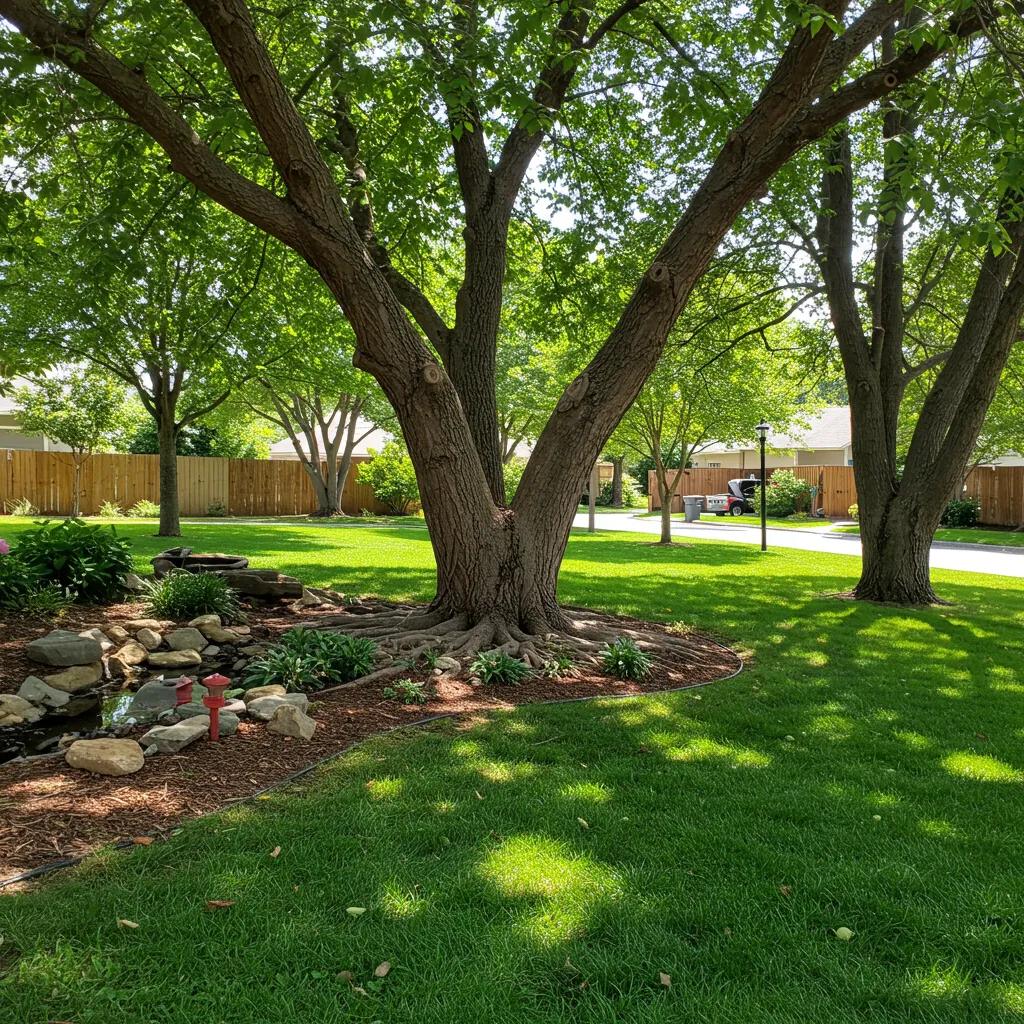
Trees for Water Conservation: Erosion Control & Stormwater Management
Trees are living infrastructure that reduce soil loss and manage water where it matters most: around homes, streets, and natural slopes. This article explains how trees prevent erosion, intercept stormwater, and support water conservation on Jacksonville properties by stabilizing soil, increasing infiltration, and lowering irrigation needs. Readers will learn mechanical pathways (roots bind soil, canopy intercepts rainfall), species choices suited to Jacksonville microclimates, and practical homeowner steps for planting and maintenance that reduce runoff and conserve water. We also map specific tree services to measurable water-conservation outcomes so homeowners can decide when a professional assessment or intervention makes sense. The guide covers erosion-control mechanisms, stormwater-management trees and canopy tactics, drought-tolerant species for Florida landscapes, the role of tree health in water quality, and the services that translate tree care into improved drainage and infiltration.
How Do Trees Prevent Soil Erosion and Stabilize Jacksonville Properties?
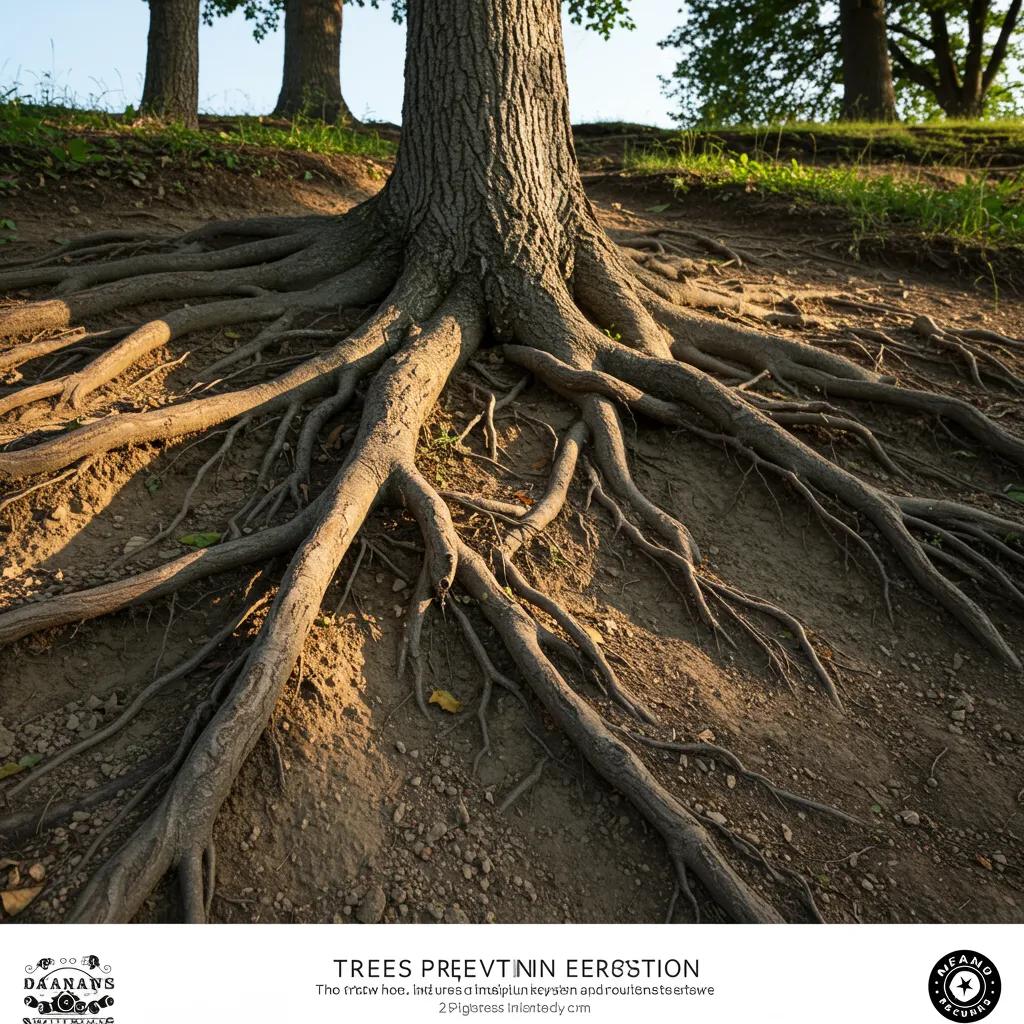
Trees prevent soil erosion by anchoring soil with roots, reducing the energy of raindrops through canopy interception, and increasing surface roughness with leaf litter and understory vegetation. These mechanisms work together to slow runoff, encourage infiltration, and lower the chance of slope failure on residential and commercial lots. In Jacksonville’s sandy to loamy soils, selecting trees with appropriate root systems and matching planting locations to slope aspects maximizes stabilization benefits. Homeowners should assess site drainage, choose species adapted to local conditions, and maintain root zones to sustain long-term stabilization. Practical steps include planting in bands along contours, mulching to retain moisture, and monitoring for signs of undercutting or exposed roots that signal erosion progression.
What Role Do Tree Roots Play in Soil Stabilization?
Tree roots bind soil particles physically and create a reinforced soil matrix that increases resistance to erosion and slope movement. Deep taproots anchor trees on steep slopes and resist pullout forces, while fibrous roots form dense mats that hold the topsoil and reduce sheet erosion on gentler slopes. Roots also improve soil structure by creating macropores that enhance infiltration and support microbial communities that cement aggregates. Matching root type to slope and soil—deep-rooted species on banks, fibrous-rooted species on flatter areas—helps prevent both acute failure and chronic surface erosion.
How Does Tree Canopy Reduce the Impact of Rainfall on Soil?
A tree canopy intercepts falling rain, dissipates its kinetic energy, and converts heavy downpours into gentler throughfall and stemflow that are less likely to displace soil. Canopy interception is a function of leaf area, branch architecture, and retention time; denser canopies increase the fraction of rainfall intercepted and delay runoff peaks. Canopy-derived throughfall concentrated near stems can be directed to infiltration zones using mulch or permeable edging to avoid localized erosion. Regular canopy maintenance preserves leaf area and interception capacity, which in turn sustains the canopy’s protective role over soil.
Which Tree Species Are Best for Erosion Control in Jacksonville’s Climate?
Species selection should prioritize root architecture, tolerance to local soils and occasional salt exposure, and maintenance needs to match property goals. Native and well-adapted trees reduce establishment water needs and support local biodiversity while providing strong root systems for stabilization. Below is a comparison of representative species and attributes useful for erosion-control planting decisions.
Intro: This table compares selected species by root type and slope suitability to help homeowners choose erosion-control trees for Jacksonville properties.
| Species | Root/System Type | Slope Suitability | Drought Tolerance |
|---|---|---|---|
| Live oak (Quercus virginiana) | Deep, spreading roots | Banks and moderate slopes | Moderate |
| Willow (Salix spp.) | Fibrous, dense near surface | Riparian edges and disturbed banks | Low–moderate |
| Sabal palm (Sabal palmetto) | Fibrous, clustering | Coastal low slopes and sandy soils | High |
| Swamp tupelo (Nyssa biflora) | Moderate, adaptable | Wet banks and seasonally saturated soils | Low–moderate |
This comparison highlights trade-offs: larger canopy trees provide interception and deep anchoring, while palms and fibrous-rooted species offer fast groundcover and tolerance for sandy sites.
How Can Homeowners Implement Tree-Based Erosion Control?
Homeowners can reduce erosion through a sequence of site assessment, species selection, proper planting, and ongoing maintenance. First, conduct a site survey for slope, soil type, drainage patterns, and existing vegetation to locate priority planting bands. Second, select species that match soil moisture and sun exposure while integrating native understory plants to increase surface roughness. Third, follow planting best practices—correct hole depth, backfill with native soil, apply mulch without piling against trunks, and water to establish roots. Finally, monitor root exposure and consult professionals for stabilization or root remediation if erosion accelerates.
- Site assessment identifies vulnerable contours and drainage paths.
- Planting bands along contours slow sheet flow and trap sediments.
- Mulching and understory plantings increase infiltration and protect soil.
These steps lead naturally to professional options when risks or root conflicts require targeted interventions like a formal Tree Health Assessment or Root Removal to address drainage problems.
What Are the Best Stormwater Management Trees for Reducing Runoff Near You?
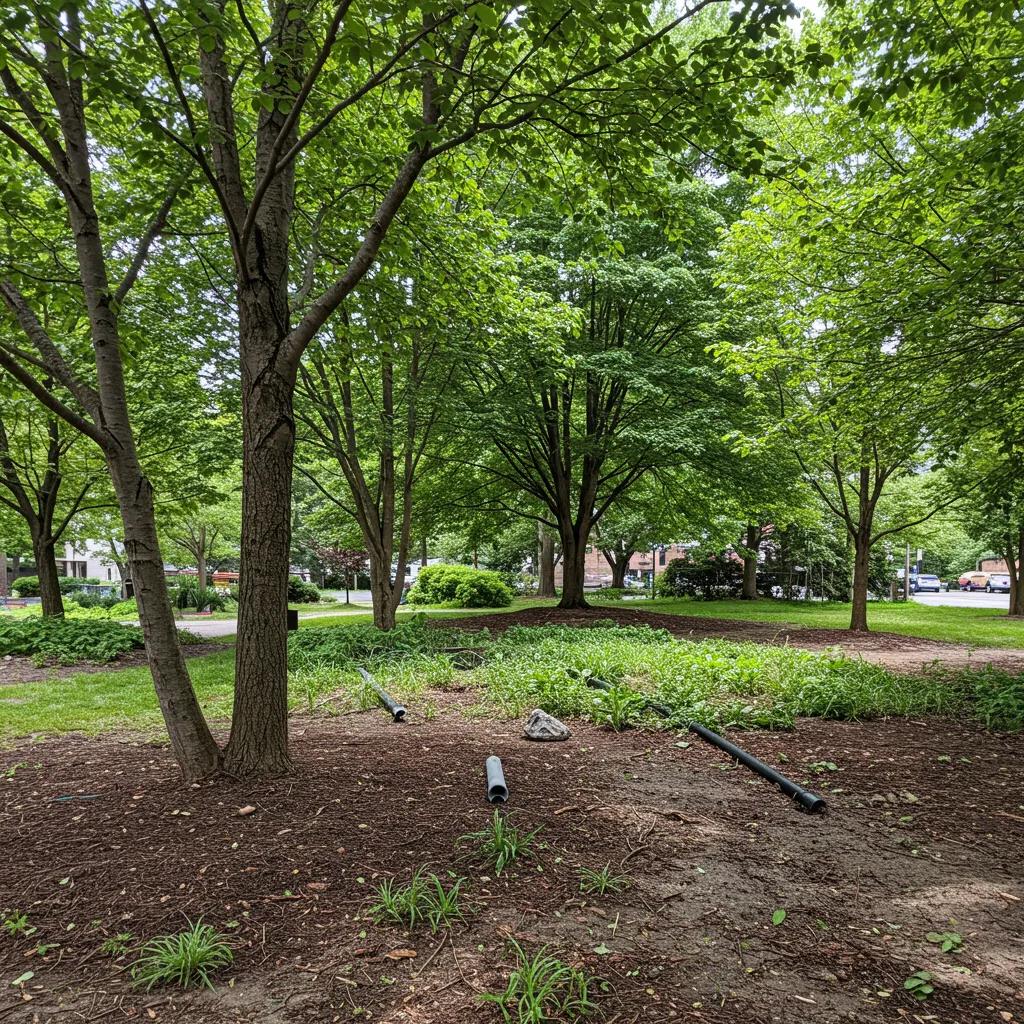
Trees reduce stormwater runoff through canopy interception, promoting infiltration via root channels, and evapotranspiration that returns water to the atmosphere. In urban and residential settings, effective stormwater trees combine dense canopies to reduce raindrop energy with root systems that fracture compacted soils and increase porosity. Proper placement near hard surfaces, paired with permeable ground treatments and rain gardens, maximizes interception and infiltration benefits. Canopy management and maintenance preserve interception rates and prevent storm damage that undermines a tree’s hydrologic functions.
How Do Trees Intercept Rainfall and Promote Water Infiltration?
Interception occurs when leaves and branches capture rainfall; that water either evaporates, drips slowly to the ground as throughfall, or flows down stems as stemflow concentrated near trunks. Roots create pathways—macropores and biopores—that let infiltrating water move downward instead of running off, increasing recharge and reducing peak flows. Leaf litter and organic soils developed beneath trees enhance infiltration rates by increasing water-holding capacity and slowing surface flow. Homeowners can increase infiltration by mulching around root zones and avoiding compaction near tree bases.
Which Urban Trees Are Most Effective for Stormwater Runoff Reduction?
Urban stormwater trees should tolerate compacted soils, limited rooting volumes, and periodic drought while maintaining canopy cover and root function. Species with broad canopies and resilient roots are generally most effective at reducing runoff in tight urban lots. Examples that perform well in urban Jacksonville conditions include hardy oaks and adapted palms, which balance canopy interception and root resilience.
- Live oak: Dense canopy, strong root spread that stabilizes nearby soil.
- Sabal palm: High tolerance for sandy, coastal conditions and low irrigation needs.
- Willow (in appropriate wet sites): Rapid growth and high transpiration for wet areas.
Selecting tree species for stormwater control requires balancing canopy interception, root performance, and site constraints such as underground utilities and pavement.
How Does Tree Trimming Improve Stormwater Management?
Pruning maintains canopy architecture that optimizes interception while removing deadwood that can lead to sudden canopy loss during storms. Selective crown thinning opens inner canopy to reduce wind leverage on limbs but preserves overall leaf area for interception; crown raising can direct stemflow where infiltration features can capture it. Scheduled maintenance minimizes storm-related canopy failures that convert a functional interception system into debris that blocks drainage. Professional pruning strategies focus on long-term canopy health and should follow standards to avoid reducing a tree’s interception capacity.
- Pruning preserves structural integrity and reduces failure risk.
- Crown thinning vs. reduction decisions depend on species and site.
- Regular maintenance sustains interception and storm resilience.
When pruning is performed by trained professionals, homeowners retain maximum stormwater benefits while reducing liability from storm damage.
What Stormwater Management Solutions Does Jacksonville Tree Service Offer?
Jacksonville Tree Service provides services that homeowners can use to translate tree benefits into practical stormwater outcomes. Their Tree Trimming & Pruning work reshapes canopies to maintain interception and reduce storm failure risk, while Tree Health Assessments identify root or canopy issues that impair infiltration and water-quality functions. Root Removal addresses root obstructions that block drainage features or damage hardscape, enabling improved water movement. Homeowners can request assessments to prioritize interventions, and certified arborists recommend targeted pruning, root management, or planting strategies to enhance stormwater control.
Intro: The table below maps core services to the mechanisms by which they improve stormwater outcomes.
| Service | Mechanism | Water-Conservation Outcome |
|---|---|---|
| Tree Trimming & Pruning | Optimizes canopy architecture | Maintains interception and reduces storm damage |
| Tree Health Assessments | Identifies root/canopy issues | Targets interventions to restore infiltration |
| Root Removal | Clears drainage obstructions | Improves soil drainage and reduces surface pooling |
This service-to-outcome mapping helps homeowners see how specific interventions support measurable stormwater goals and when to schedule professional work.
Which Drought-Tolerant Trees Are Ideal for Water Conservation in Florida Landscapes?
Drought-tolerant trees conserve water by requiring less supplemental irrigation and by creating microclimates that reduce landscape evaporative loss. Traits that support water savings include deep root systems accessing subsurface moisture, low leaf-area-to-stem ratios that limit transpiration, and seasonal dormancy that reduces water demand during dry periods. Choosing native or well-adapted species for Jacksonville’s climate lowers irrigation needs, enhances resilience to heat, and supports local ecosystems. Strategic planting—placing shade trees to cool structures and grouping plants by water needs—maximizes household water savings.
What Are the Benefits of Planting Drought-Tolerant Trees for Water Conservation?
Drought-tolerant trees reduce household irrigation demands, lower water bills, and increase landscape resilience during dry spells. Ecologically, these trees support soil stability and native biodiversity while decreasing the frequency and volume of outdoor watering needed. Economically, less irrigation equipment and fewer watering cycles translate into operational savings and reduced runoff from overwatering. Cumulatively, neighborhood-level adoption of drought-tolerant plantings enhances urban resilience to periodic drought and reduces stress on municipal water supplies.
Which Native Florida Trees Require Less Irrigation?
Native and well-adapted species offer proven water-saving performance once established, especially on sites that match their ecological preferences. Examples include sabal palm, which tolerates sandy soils and salt exposure, and certain oaks that combine deep roots with moderate drought tolerance. The list below highlights species and planting considerations.
- Sabal palm: Compact root clustering, high drought and salt tolerance, ideal for coastal yards.
- Live oak: Deep roots and summer drought tolerance once established, suitable for larger yards.
- Southern magnolia (where soil moisture allows): Moderate drought tolerance, evergreen canopy providing shade.
Selecting species by microclimate—coastal, inland, upland, or low-lying—reduces irrigation needs and improves establishment success.
How Can Water-Wise Landscaping with Trees Reduce Water Bills?
Water-wise tree placement reduces evaporative loss from lawns and shaded structures, cutting outdoor cooling needs and landscape irrigation. Trees positioned to shade roofs and HVAC units lower ambient temperatures, which indirectly reduces household water use associated with cooling landscapes. Techniques such as mulching, installing drip irrigation targeted to root zones, and grouping plants by water demand minimize waste. Over time, reduced irrigation frequency and lower lawn area translate into measurable savings on water bills and maintenance time.
How Does Jacksonville Tree Service Support Drought-Tolerant Tree Planting?
Jacksonville Tree Service supports water-wise planting by offering Tree Health Assessments that evaluate site conditions and recommend drought-adapted species and planting techniques. Professionals can advise on soil preparation, mulching, and aftercare to improve establishment without unnecessary irrigation. Post-planting, maintenance options like targeted pruning help trees develop root systems that access deeper moisture and remain water-efficient. Homeowners benefit from expert species selection and care plans that reduce long-term watering needs.
Intro: For homeowners seeking guidance, a professional assessment identifies species and siting strategies that maximize water conservation benefits.
How Does Tree Health Impact Water Quality and Conservation Efforts?
Healthy trees filter water, trap sediments, and foster soil biology that breaks down pollutants, thereby improving local water quality while sustaining conservation functions. Root zones act as biological filters, and canopy interception reduces pollutant-laden runoff velocity. Tree decline—manifest as canopy thinning, root damage, or dieback—reduces filtration capacity and may increase sediment transport during storms. Regular assessments and timely interventions maintain the biological and physical processes that underpin trees’ roles in conserving water and protecting downstream habitats.
How Do Healthy Tree Roots Filter Water and Prevent Contamination?
Roots and their associated rhizosphere microbial communities trap sediments, absorb excess nutrients, and transform certain contaminants into less harmful forms. Root exudates support microbial populations that metabolize organic pollutants, while root-mediated soil structure enhances retention time for filtration. Protected root zones with organic mulch and minimal compaction preserve these filtration processes. Maintaining healthy root systems is therefore central to using trees as living filters that reduce pollutant loads reaching streams and storm drains.
What Are the Signs of Tree Health Issues Affecting Water Conservation?
Indicators such as thinning canopy, dieback, exposed or girdled roots, and soil erosion around trunk bases signal reduced capacity for interception and filtration. Additional signs include poor leaf condition, epicormic sprouting, or leaning trunks that indicate structural instability. Early detection allows for corrective measures—soil aeration, root protection, targeted pruning, or professional assessment—before a tree’s water-quality functions degrade. Homeowners should monitor trees after storms and during droughts for accelerated signs of decline.
How Do Arborists Conduct Tree Health Assessments for Water Quality?
Arborists combine visual canopy and trunk inspections with root-zone evaluation and soil drainage assessments to determine how a tree influences local water flows and quality. Assessments examine root health, compaction, stump or root conflicts with drainage infrastructure, and signs of disease or pests that reduce a tree’s filtration ability. Based on findings, arborists recommend interventions such as mulching, drainage rerouting, targeted root management, or species replacement to restore or enhance water-quality services.
How Can Proper Tree Care Improve Local Ecosystem Water Quality?
Coordinated tree care across neighborhoods increases cumulative infiltration, reduces pollutant loads entering waterways, and stabilizes streambanks and riparian zones. When property owners maintain trees with mulching, correct pruning, and protection of root zones, the aggregated effect lowers municipal stormwater treatment needs and supports healthier downstream habitats. Community programs that encourage consistent tree care magnify these benefits, improving resilience to storm events and reducing long-term water-quality management costs.
What Tree Services Help Manage Water Runoff and Support Conservation Near You?
Yes—targeted tree services directly support water-conservation goals by restoring root-zone function, maintaining canopy interception, and removing hazards that block drainage. Services map clearly to outcomes: Tree Health Assessments diagnose conditions that reduce infiltration; Tree Trimming & Pruning preserve canopy interception; and Root Removal clears drainage obstructions—each supporting measurable improvements in runoff management. Professional assessment ensures interventions are timed and executed to protect tree function and site stability.
How Does Root Removal Improve Soil Drainage and Water Infiltration?
Root Removal can improve drainage when roots physically block swales, drainpipes, or create undesirable pooling by redirecting water. Professional, selective root removal clears obstructions while preserving as much of the root system as possible to avoid destabilizing soil. Techniques include trenching to redirect roots, targeted excavation, and follow-up stabilization plantings to restore infiltration pathways. Because root removal can also reduce anchorage, it is essential to balance drainage gains with tree stability and consider replanting or reinforcement after major root work.
How Can Tree Trimming Enhance Canopy Efficiency for Water Management?
Pruning that focuses on preserving leaf area while removing dysfunctional branches maintains interception without compromising tree health. Selective crown thinning can reduce wind resistance and limb failure risk while keeping sufficient foliage for rain capture. Timing of trimming—outside of peak growth or nesting seasons—supports recovery and minimizes stress. When pruning follows arboricultural standards, it protects the tree’s long-term interception and evapotranspiration functions that benefit water management.
When Is Emergency Tree Removal Necessary for Water Conservation?
Emergency removal becomes necessary if a destabilized tree threatens slope integrity, if uprooted or fallen trees block drainage channels, or if a damaged tree poses immediate risk of causing rapid erosion or infrastructure damage. Clear signs include root plates lifted from the soil, large cracks at the trunk base, or trees leaning dangerously over drainage features. Rapid response minimizes further soil loss, restores flow in blocked drains, and reduces liability; emergency crews prioritize safety and stabilization during removal.
Why Choose ISA Certified Arborists for Water-Conscious Tree Services?
ISA Certified arborists bring training in tree biology, structure, and best practices that reduce the risk of interventions that unintentionally undermine water-conservation functions. Certification signals adherence to standards for pruning, root-zone work, and assessments that protect long-term tree health and ecological outcomes. Trained arborists recommend interventions that maintain canopy interception, preserve root-mediated infiltration, and ensure stabilization measures are compatible with water-management goals.
Intro: The table below summarizes the service-to-outcome relationships for homeowner decision-making.
| Service | Mechanism | Water-Conservation Outcome |
|---|---|---|
| Tree Health Assessments | Diagnostic evaluation of roots/canopy | Prioritizes actions to restore infiltration and filtration |
| Tree Trimming & Pruning | Canopy shaping and deadwood removal | Maintains interception and reduces storm-damage debris |
| Root Removal | Targeted clearing of root obstructions | Restores drainage paths and reduces pooling |
What Are the Economic and Environmental Benefits of Trees for Water Conservation?
Trees deliver economic savings by reducing peak runoff volumes, which can defer or downsize hard infrastructure like retention basins or storm sewers. Mature trees also enhance property value and curb appeal, and reduced erosion lowers repair costs to foundations, driveways, and landscaping. Environmentally, trees decrease pollutant loads, support biodiversity, and buffer climate impacts through shading and evapotranspiration. When homeowners and communities invest in tree-based green infrastructure, both private savings and public benefits accrue through improved storm resilience and reduced municipal treatment burdens.
How Do Trees Reduce Stormwater Infrastructure Costs?
By intercepting rainfall and promoting infiltration, distributed trees reduce the volume and rate of runoff entering centralized systems, which can lower the need for large-capacity conveyance and storage infrastructure. Simulations and municipal case studies show that widespread tree canopy preservation reduces peak flows during storms, enabling smaller or phased infrastructure upgrades. For homeowners, fewer drainage failures and reduced surface erosion translate into lower repair costs and deferred capital expenditures for hardscape remediation.
In What Ways Do Trees Improve Property Value Through Water Management?
Well-placed, healthy trees reduce the likelihood of erosion-related damage, preserve usable landscape area, and provide shade that lowers cooling costs—attributes that prospective buyers value. Properties with managed trees and effective water-control landscaping often command higher prices due to perceived durability and aesthetic appeal. Reduced maintenance and irrigation needs from drought-tolerant plantings further add to the life-cycle value of mature, water-wise landscapes.
How Do Trees Contribute to Climate Resilience in Jacksonville?
Trees buffer storm impacts by intercepting rain, slowing runoff, and stabilizing soils on slopes and riparian areas, which reduces flood peaks and protects infrastructure. Drought-tolerant plantings increase landscape resilience to heat and water stress, while canopy cover lowers urban heat-island effects that exacerbate water demand. Integrating trees into broader green infrastructure strategies strengthens neighborhood-level resilience to extreme weather events and long-term climate variability.
What Community Initiatives Support Tree Planting for Water Conservation?
Community initiatives such as neighborhood planting drives, volunteer stewardship programs, and collaborative projects with local conservation groups amplify private homeowner actions. These efforts foster coordinated planning for corridor plantings, riparian buffers, and shared stormwater control features that deliver greater cumulative benefits than isolated plantings. Homeowners can engage with local programs to align private efforts with broader watershed-scale outcomes.
- Volunteer planting increases canopy quickly in targeted areas.
- Coordinated plantings protect shared drainage corridors.
- Neighborhood stewardship sustains long-term maintenance.
These community approaches expand the reach of individual investments in trees and water conservation.
What Are Common Questions About Trees and Water Conservation Near You?
This section answers homeowner questions concisely, highlighting mechanisms, species, and service options that support water conservation and erosion control.
How Do Trees Prevent Soil Erosion?
Trees prevent soil erosion by using roots to physically bind soil, canopies to dissipate raindrop energy, and groundcover/leaf litter to slow surface flows. Roots increase soil shear strength and create channels for infiltration, while canopy interception reduces the direct impact of rainfall on soil surfaces. Together, these functions reduce sediment transport and stabilize slopes.
What Trees Are Best for Stormwater Management?
Effective stormwater trees combine dense canopy and root systems that improve infiltration. Top picks include live oak for broad interception and anchoring, sabal palm for sandy, coastal resilience, and willows in wet, riparian sites where fast water uptake is needed. Each choice depends on site constraints like soil compaction and space.
Can Tree Services Help With Water Conservation?
Yes. Tree Health Assessments identify problems that reduce infiltration, Tree Trimming & Pruning preserve canopy interception, and Root Removal clears drainage obstructions—each supporting measurable improvements in runoff management. Professional assessment ensures interventions are timed and executed to protect tree function and site stability.
How Do Drought-Tolerant Trees Save Water in Florida?
Drought-adapted trees save water through traits such as deep roots that access subsurface moisture, lower transpiration rates, and seasonal water-conserving behaviors. Planting them in appropriate microclimates, mulching, and grouping by water needs reduce irrigation frequency and overall landscape water use.
Intro: The brief answers above summarize practical actions and species guidance for homeowners focused on water-smart landscapes.
- Assess your property for slopes, drainage, and soil type.
- Select species suited to microclimates and water goals.
- Maintain canopy and root zones with routine care to preserve water-conserving functions.
These steps connect homeowner decisions to measurable conservation outcomes and indicate when to involve trained professionals.