
Tree Appraisal Services Near You
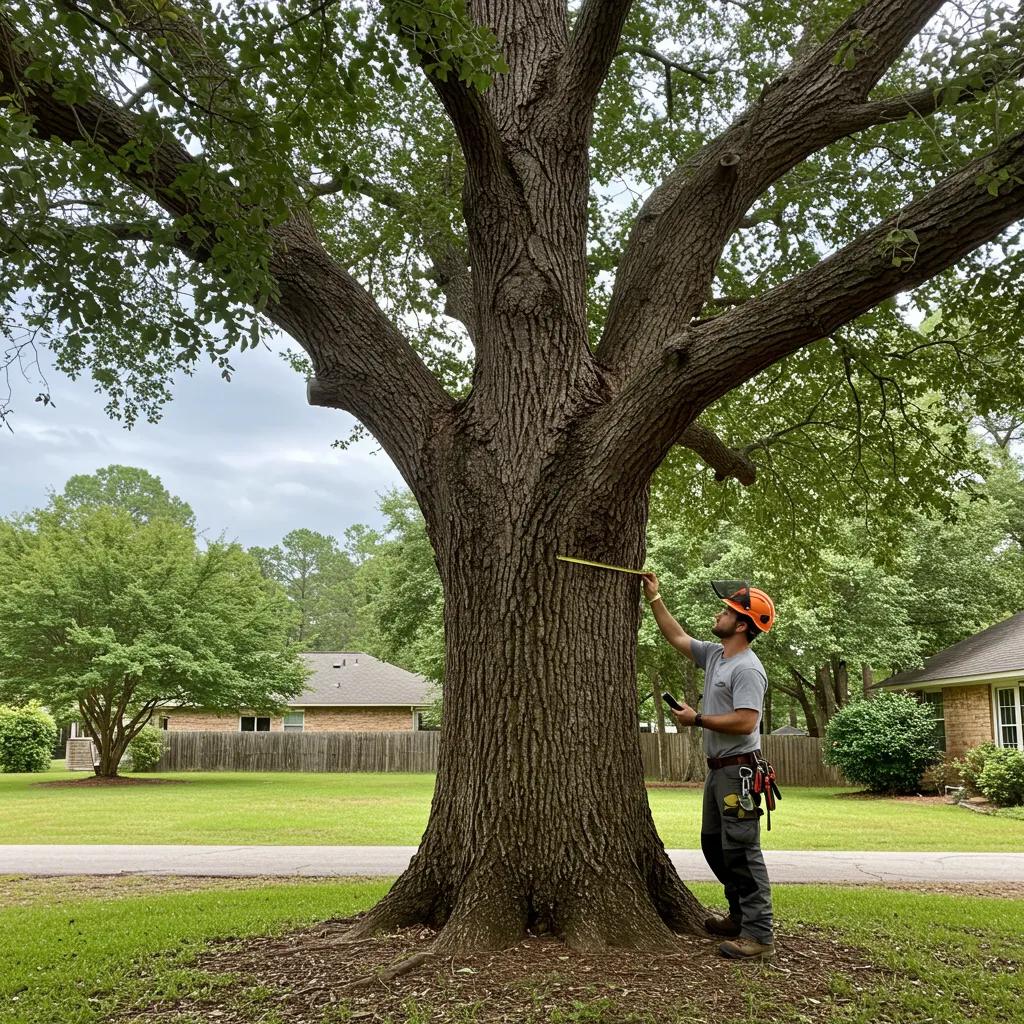
Jacksonville Tree Appraisal Services by ISA Certified Arborists
A tree appraisal is a professional assessment of a tree’s monetary value performed by a qualified arborist using recognized methods, and it establishes a defensible value homeowners can use for insurance, legal, real estate, and tax purposes.
This article explains how tree appraisal and tree valuation differ from tree health assessment, outlines standard CTLA-based methods such as trunk formula and replacement cost, and shows homeowners when a formal appraisal is necessary. Readers will learn what to expect during an appraisal appointment, how ISA certified arborists conduct valuations, typical tree appraisal cost ranges, and how appraisals support insurance claims and property transactions. Practical, Jacksonville-focused guidance is included alongside sample calculations, EAV tables that map valuation drivers, and checklists homeowners can use when preparing for a visit. Throughout, the content integrates local service information where helpful while keeping the primary focus on education about tree valuation and appraisal best practices.
What Is Tree Appraisal and Why Is It Important?
A tree appraisal is a formal valuation that translates a tree’s physical attributes, condition, and context into a monetary amount using established methods, which provides a clear basis for insurance settlements, legal compensation, or real estate adjustments. The appraisal works by combining objective measurements (diameter, height, crown spread) with condition assessments and a chosen valuation method such as the trunk formula or replacement cost, producing a defensible figure that stakeholders accept. Homeowners gain actionable benefits from appraisals: they establish replacement cost after casualty, quantify damage for insurance claims, and document landscape value for transactions or disputes. Understanding these elements helps property owners decide when a quick health assessment suffices and when a full CTLA-style appraisal is required. The next sections break down how valuation differs from health assessment and list the primary uses that make appraisals valuable.
How Does Tree Valuation Differ from Tree Health Assessment?
Tree valuation focuses on monetary worth while a tree health assessment evaluates biological health and structural risk; both overlap when condition affects value, but their aims and deliverables differ. A health assessment documents disease, pests, structural defects, and risk factors affecting safety and longevity, and those findings feed into valuation by altering life expectancy and restoration costs. For example, an otherwise mature oak with advanced root rot will have a lower replacement cost and reduced market value than a healthy specimen of the same size because remaining useful life and safety concerns reduce its appraised value. Homeowners should request a health assessment when risk mitigation or pruning decisions are primary, and a CTLA-style appraisal when evidence of monetary loss, insurance claims, or legal proceedings is anticipated. This clarification prepares the homeowner to select the right service for their immediate objective.
What Are the Main Uses of Tree Appraisal Services?
Tree appraisals are commonly used for insurance claims after storm or casualty loss, legal disputes such as trespass and eminent domain, real estate transactions where landscape value affects price, and tax documentation for casualty loss deductions. Each use requires slightly different report emphasis: insurance claims demand clear replacement cost and photographic evidence, legal disputes often need expert testimony and defensible CTLA method application, and real estate assessments combine inventory-level valuations with market context. Homeowners benefit when appraisals are tailored to the intended recipient—insurers, attorneys, or buyers—because the report format and level of documentation differ. The following bullet list summarizes primary homeowner-focused use cases and what each typically requires.
- Insurance claims: Replace or compensate for lost trees with documented replacement costs and photos.
- Legal disputes: Provide an expert, defensible valuation and possible testimony in compensation cases.
- Real estate transactions: Quantify landscape value for listing adjustments or buyer negotiations.
- Tax/casualty loss: Support deduction claims with documented methodologies and supporting evidence.
These use cases show why selecting the proper appraisal scope matters and lead to the next topic: who specifically needs a certified tree appraiser in Jacksonville.
Who Needs a Certified Tree Appraiser in Jacksonville?
Homeowners who experience sudden storm damage, vehicle impact, vandalism, or disease that causes casualty loss commonly need a certified tree appraiser to document monetary loss for insurers or legal processes. Sellers and buyers use appraisals to clarify landscape value during negotiations, and attorneys or municipalities may request appraisals in trespass, boundary, or eminent domain matters. Local context matters in Jacksonville because species, coastal conditions, and regional market expectations influence replacement cost and useful life estimates; a local certified professional will factor regional species lifespans and availability into valuation. If a homeowner anticipates a dispute, an insurance claim, or a real estate adjustment, consulting a certified arborist for a CTLA-style appraisal is the recommended next step.
| Tree Attribute | How It Is Measured | Relative Effect on Value |
|---|---|---|
| Species | Identification and local market desirability | High — desirable species command higher replacement cost |
| Diameter (DBH) | Measured at 4.5 ft, primary size input to trunk formula | High — larger DBH increases calculated value substantially |
| Condition | Health, defects, structural soundness | High — poor condition reduces value via life expectancy modifiers |
| Location | Placement on property and landscape contribution | Medium — high-visibility placement raises replacement value |
| Remaining Useful Life | Estimated years of future benefit | High — longer useful life increases market-based valuation |
How Do ISA Certified Arborists Conduct Tree Appraisals?
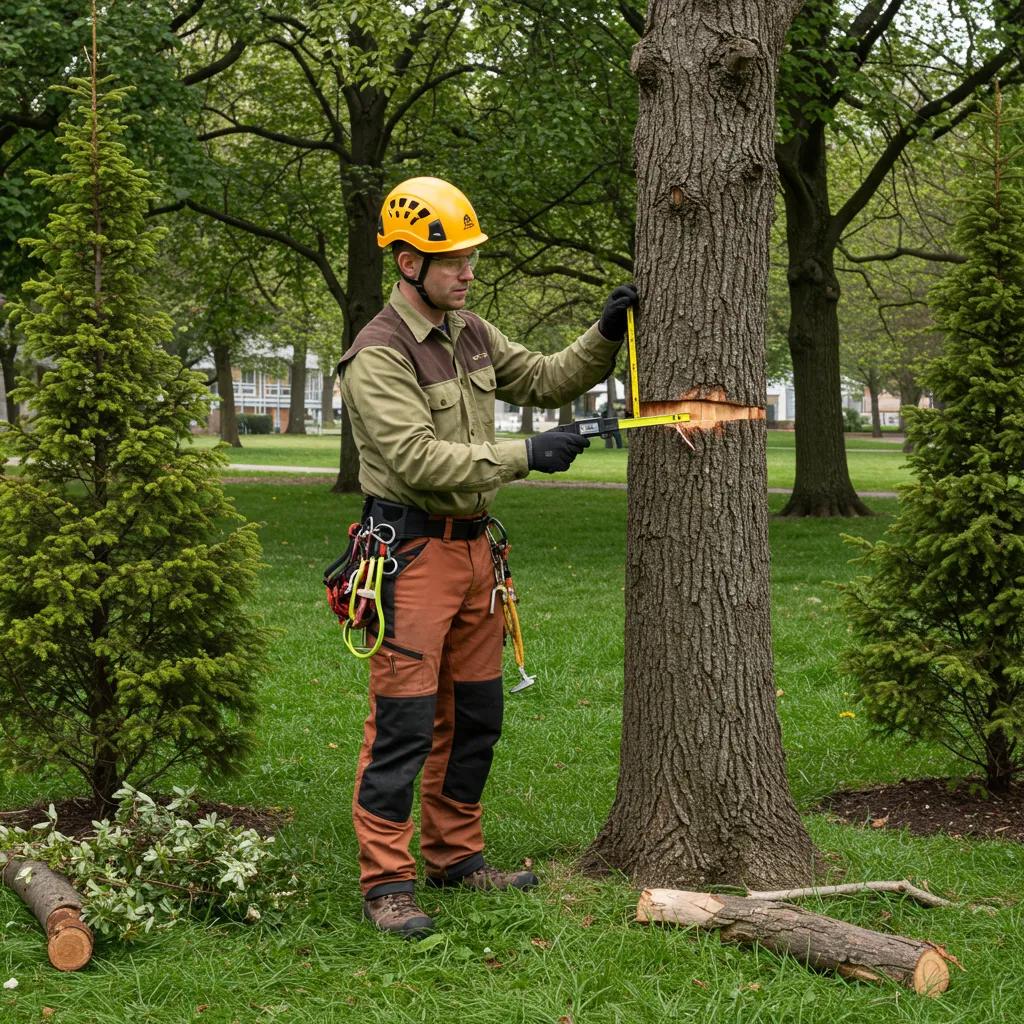
ISA certified arborists conduct tree appraisals by combining professional credentials, objective measurements, condition assessments, and accepted CTLA methods to produce defensible reports that insurers, courts, and buyers recognize. The ISA credential signals training in arboricultural science and best practices, and when paired with CTLA-guided methods, it supports report credibility and acceptance by third parties. A typical appraisal process includes an initial consultation, on-site data collection, selection of an appropriate valuation method, and report preparation with supporting photos and calculations. Below we outline the role of ISA certification, CTLA method application, and the key operational steps an arborist follows during a valuation.
What Is the Role of ISA Certification in Tree Appraisals?
ISA certification indicates that an arborist has met professional standards in tree care knowledge and ethical practice, which increases the credibility of appraisal reports submitted to insurers or courts. The certification does not substitute for CTLA methodology, but it does signal that the practitioner understands arboricultural principles used in valuation and can reliably assess condition and risk. Clients benefit because ISA credentialing provides confidence in measurement accuracy, condition diagnosis, and professional reporting standards. When combined with clear methodology and documentation, an ISA certified arborist’s appraisal is more likely to withstand scrutiny in claims and legal reviews.
How Is the CTLA Guide for Plant Appraisal Used in Valuation?
The Council of Tree and Landscape Appraisers (CTLA) Guide for Plant Appraisal supplies standardized procedures—such as the trunk formula method and the replacement cost approach—that arborists apply to generate consistent, defensible valuations. The trunk formula converts trunk cross-sectional area and species/unit value into a base figure which is then adjusted for condition, location, and remaining useful life; replacement cost focuses on the cost to replace with an equivalent specimen. Insurers and courts commonly accept CTLA-based calculations because they provide transparent, repeatable steps and allow reconciliation between different valuation approaches. A simple worked example follows later to show how the trunk formula produces a numeric result homeowners can understand.
What Are the Key Steps in Our Tree Appraisal Process?
A certified arborist typically follows a structured process: initial consultation and scoping, on-site measurements and condition assessment, method selection and calculation, then report drafting and delivery with photographs and recommendations. The initial consultation clarifies the appraisal purpose—insurance, legal, or real estate—which determines the report depth and documentation level required. On-site work records DBH, height estimates, crown spread, defect notes, and photographic evidence; condition ratings then inform life expectancy and multiplier adjustments. Report delivery includes methodology disclosure, calculation worksheets, photographs, and recommendations, producing an evidentiary packet homeowners can submit to insurers or legal counsel.
Initial Consultation and Site Inspection
The initial consultation establishes scope, intended use, and scheduling, and the site inspection collects measurements and photographic evidence to support valuation calculations. Inspectors confirm species identity, record DBH at 4.5 feet, estimate height and crown spread, and note defects or disease that influence remaining useful life. These observations determine which CTLA method best fits the purpose; for example, replacement cost is common for insurance claims while trunk formula may be preferred for court or eminent domain cases. Clear scoping at this stage reduces misunderstandings later and ensures the final report meets stakeholder expectations.
Data Collection and Tree Condition Analysis
Data collection captures quantitative measures and qualitative condition indicators that combine into a condition rating used to adjust base valuation figures, and condition analysis links biology to monetary impact. Arborists document live crown ratio, decay signs, root issues, pest presence, and recent disturbance history to estimate remaining useful life and hazard potential. That biological evidence becomes the reasoned basis for applying CTLA multipliers or depreciation percentages in the final calculation. Accurate data collection is therefore essential to a defensible appraisal and informs the next phase: calculation and reporting.
Report Preparation and Delivery
Report preparation organizes collected data, applies the chosen CTLA method with supporting worksheets, and compiles photographs and narrative explanations into a deliverable suitable for insurers, attorneys, or buyers. The written report explains each calculation step, cites the CTLA method used, and includes clear conclusions and recommendations, such as whether replacement planting or removal is recommended. Delivery typically includes both digital and print-ready documentation that stakeholders can submit as part of a claim or legal packet. A well-structured report reduces the likelihood of undervaluation and speeds resolution with insurers.
Jacksonville Tree Service (also known as TreeLine and Volusia Bobcat & Tree) employs ISA certified arborists who can provide formal tree appraisals and consulting-level reports; they list Tree Health Assessments among their services and offer local expertise in Jacksonville. When homeowners need a formal valuation, these ISA certified professionals can scope a CTLA-style appraisal or provide a preliminary assessment that clarifies whether a full paid report is necessary. This local integration means homeowners can choose between an initial consult to define scope and a paid, documented report suitable for claims or legal use.
How Much Does a Tree Appraisal Cost Near You?
Tree appraisal pricing typically varies by scope: a basic consultation or estimate is usually at the low end, while a full CTLA-style report with calculations, photographs, and a signed appraisal form is at the higher end. Typical market ranges seen regionally for individual-tree appraisals are: brief onsite estimates or consultations (often low-to-no charge), basic valuation reports in the lower hundreds, and comprehensive CTLA-style reports that can range from several hundred to over a thousand dollars depending on complexity, number of trees, and required documentation. Key cost drivers include tree size and accessibility, number of trees, report depth and intended use, and whether expert testimony or detailed exhibit preparation is needed. The following EAV table maps primary pricing factors to their typical impact on fee.
| Cost Driver | Description | Typical Impact on Fee |
|---|---|---|
| Tree size and DBH | Larger trees require more measurement time and complex calculation | High — increases fee significantly |
| Number of trees | Multiple trees raise time and reporting complexity | High — per-tree discount may apply but total fee rises |
| Report depth | CTLA worksheets, legal affidavits, exhibit prep | High — deeper reports cost more |
| Accessibility | Difficult or hazardous access requires additional time or equipment | Medium — increases site time and safety considerations |
| Intended use | Insurance, legal, or eminent domain needs extra documentation | High — legal/claim-oriented reports are pricier |
What Factors Affect Tree Appraisal Pricing?
Pricing is primarily influenced by tree size, site complexity, number of specimens, and intended report use; each factor increases the time and expertise required to produce a defensible appraisal. Larger diameter trees require precise measurement and often more extensive investigation into root and structural condition; multiple trees multiply site time and report compilation work. The intended recipient—insurance adjuster, attorney, or buyer—matters because legal and insurance contexts often require additional exhibits and sworn statements that add to cost. Homeowners should ask providers to itemize what is included and request a scoped estimate to match their needs.
What Is Included in a Professional Tree Appraisal Report?
A professional report typically includes identification and measurements (DBH, height, crown spread), condition assessment and remaining useful life estimate, the chosen valuation method with calculation worksheets, high-quality photographs with captions, and a narrative explaining assumptions and conclusions. Additional inclusions for legal or insurance use can comprise signed affidavits, a CV or credential summary for the arborist (e.g., ISA certification), and exhibit-ready materials for submission. Requesting a sample excerpt before commissioning a report clarifies deliverables and ensures the final product will meet insurer or court expectations. Clear inclusions reduce back-and-forth and speed claim processing.
Are Free Consultations Available for Tree Valuation?
Many providers offer a free initial consultation or estimate to determine whether a full CTLA-style appraisal is necessary, though comprehensive reports are usually fee-based due to the time required to document and calculate valuations. Free consultations typically include preliminary site review, scope definition, and a recommendation for either a paid detailed report or a simpler assessment. For claims or legal matters requiring defensible, signed reports, homeowners should expect a paid CTLA-style appraisal; however, asking for a scoped estimate helps clarify expected costs and timelines. Jacksonville Tree Service’s published services indicate that Tree Health Assessments are available and that initial consultations can help define whether a formal appraisal is needed.
How Can Tree Appraisals Help with Insurance Claims?
Tree appraisals support insurance claims by documenting damage, calculating replacement costs or monetary loss, and providing expert narrative and exhibits that insurers recognize when settling casualty losses. Appraisals provide the evidence insurers require: measurements, photographs, cause of loss, and CTLA-style calculations that justify settlement amounts. Arborists can also liaise with adjusters, explain methodology, and supply follow-up documentation if insurers request clarification, which speeds negotiation and reduces undervaluation risk. The following table maps claim types to typical evidence and appraisal deliverables insurers expect.
| Claim Type | Evidence Needed | Appraisal Deliverable |
|---|---|---|
| Storm/casualty loss | Photos of damage, cause of loss, measurements | Replacement cost calculation, photos, narrative |
| Vehicle impact or vandalism | Incident report, photos, police report (if available) | Valuation worksheet, condition assessment, restoration cost |
| Disease leading to sudden loss | Diagnostic notes, samples, photos | Expert opinion on cause, depreciation, replacement estimate |
| Eminent domain removal | Map of impacts, scope of removal | Market-based valuation, witness-ready report and exhibits |
What Types of Tree Damage Qualify for Insurance Valuation?
Qualifying damage usually includes sudden and accidental events such as storms, windthrow, vehicle impact, vandalism, or other casualty events; disease can qualify when it causes a sudden loss or is covered under policy terms. Insurers typically look for clear evidence linking the damage to a covered peril and require documentation such as date-stamped photos and an arborist’s narrative that establishes cause and effect. Chronic decline due to age may not qualify for casualty claims, but sudden disease-related failure sometimes does if documented promptly. Prompt appraisal and submission improve the likelihood of full, timely consideration by the insurer.
How Do Arborists Support Insurance Claim Processes?
Arborists support claims by documenting the scene with measurements and photographs, preparing CTLA-style calculations or replacement cost estimates, and communicating directly with adjusters to explain methodology and findings. They can compile an insurance packet that includes the signed report, calculation worksheets, and photographic exhibits that insurers accept as part of a claim. When needed, arborists may also prepare exhibit-ready materials or provide written statements that clarify technical points for non-specialist adjusters. This collaborative approach reduces the chance of undervaluation and can accelerate settlement.
Can Tree Appraisals Maximize Your Insurance Payout?
Accurate, CTLA-based appraisals maximize the chance of obtaining fair compensation because they present a transparent methodology, documented evidence, and reasoned conclusions that insurers and courts can evaluate objectively. Common insurer pitfalls include relying on generalized replacement estimates or understating tree size and condition; a defensible appraisal addresses those gaps with precise measurements and life-expectancy adjustments. A short case-style example: a professionally measured trunk formula valuation for a mature tree often reveals replacement costs several times higher than simple retail estimates, demonstrating the value of professional appraisal. Proper documentation therefore strengthens negotiation and reduces the risk of undervaluation.
How Do Tree Appraisals Impact Property Value and Real Estate Transactions?
Tree appraisals quantify the contribution of significant specimens to overall property value, helping sellers and buyers account for landscape assets during negotiation or pre-listing adjustments. Mature, well-placed trees can add noticeable curb appeal and measurable market value, while hazardous or declining specimens can detract from price and require disclosure. Property tree value assessments for sales combine inventory, individual valuations, and recommended actions that inform pricing, seller repairs, or buyer expectations. Understanding these dynamics helps both parties make evidence-based decisions during a transaction.
How Do Trees Contribute to Overall Property Value?
Trees contribute economically through shade, energy savings, stormwater mitigation, and aesthetic value, with studies and market analyses often showing percentage ranges for added value depending on species and placement. High-value species and mature specimens near primary living areas or street frontage typically generate the highest market contribution, while poorly placed or hazardous trees can reduce saleability. A valuation may allocate part of the landscape’s total worth to individual specimens based on replacement cost and landscape function. Recognizing these factors helps sellers prioritize which specimens to document and highlight.
What Is a Property Tree Value Assessment for Home Sales?
A property tree value assessment compiles a tree inventory, assigns valuations to material specimens, and delivers recommendations for maintenance or replacement that help sellers and buyers understand landscape value. This assessment often includes photographs, valuation worksheets, and summaries that a listing agent or buyer can use to justify listing price changes or negotiate credits. Results inform decisions such as whether to remove hazardous trees before sale, to offer credits, or to document landscape value when marketing the property. Preparing this packet prior to listing reduces surprises and supports transparent negotiations.
How Does a Tree Inventory Support Property Management?
A tree inventory provides a baseline of species, size, condition, and maintenance needs that property managers or HOAs can use to plan budgets, schedule care, and track changes over time. Inventories support preventative maintenance, risk mitigation, and phased replacement planning that protect landscape value and reduce unexpected emergency removal costs. For larger properties, inventories also aid insurance and risk reporting and provide data for periodic revaluation. Using inventory data as a management tool helps maintain the long-term contribution of trees to property value.
| Entity | Attribute | Value |
|---|---|---|
| Inventory | Species, DBH, condition | Baseline for maintenance planning |
| Maintenance Plan | Recommended actions and timing | Budget forecasting and risk reduction |
| Valuation Baseline | Appraised values at given date | Future comparison for tax, insurance, or sale purposes |
What Role Do Tree Appraisals Play in Legal Disputes and Tax Deductions?
In legal contexts such as trespass, boundary disputes, eminent domain, and tax casualty loss claims, appraisals provide an evidentiary basis for compensation and often require CTLA-aligned reports and expert testimony. Courts and negotiating bodies expect documentation that explains valuation methodology, provides calculations, and supports conclusions with photographic and measurement evidence. For tax purposes, appraisal documentation that details the cause of loss, valuation method, and timing is essential when supporting casualty loss deductions. A correctly prepared appraisal therefore plays a central role in achieving just compensation or tax outcomes.
How Are Tree Valuations Used in Trespass and Boundary Disputes?
In trespass and boundary disputes, valuations quantify the loss or damage when trees are harmed or removed without consent, and reports typically include precise measurements, cause-of-damage analysis, and an expert opinion on fair compensation. Courts and mediators rely on defensible methodology—often CTLA-based—and clear documentation to determine equitable remedies. Expert witness testimony that explains assumptions and methods bolsters the report’s credibility during hearings. Preparing such documentation promptly after an incident preserves evidence and strengthens the homeowner’s position.
What Is Eminent Domain Tree Compensation?
Eminent domain compensation requires appraisals that calculate fair market replacement or monetary compensation for trees removed for public works, taking into account species, size, landscape function, and replacement cost. Arborists producing these valuations apply standardized methods to justify compensation amounts and may provide exhibits that show how the valuation was derived. Accurate, timely appraisals help property owners negotiate fair settlements when public projects impact landscape assets. Early engagement ensures that relevant evidence and site conditions are well documented.
How Can Tree Appraisals Support Tax Deductions for Casualty Loss?
For casualty loss tax claims, appraisal reports document the nature and timing of the event, the cause of loss, and the monetary value lost, delivering the evidence tax authorities require to substantiate deductions. Reports should include the valuation method, calculation worksheets, photographs, and a narrative tying the loss to a recognized casualty event. Homeowners are advised to combine appraisal documentation with advice from a tax professional when preparing deduction claims. Proper documentation increases the likelihood that a deduction is accepted during review.
How to Request Tree Appraisal Services from Certified Arborists Near You?
Requesting appraisal services begins with defining your objective—insurance claim, legal dispute, or property sale—then contacting a qualified arborist to schedule a scoped consultation that matches report depth to intended use. Provide photos, dates of damage, and site context when requesting a quote so the provider can size the job accurately. Expect a clear scoping conversation that produces a written estimate and timeline for delivery; comprehensive CTLA-style reports require more time for calculations, documentation, and review. The sections below explain how to request a quote, what to expect on appointment day, and introduces local ISA certified professionals.
How to Get a Free Tree Appraisal Quote in Jacksonville?
To request a free initial estimate, prepare basic information such as photos of the tree(s), a description of the issue or damage date, and the property location so the arborist can assess whether a free consult is appropriate. Many providers offer a complimentary site visit or phone consult to scope work and advise whether a paid, detailed appraisal is necessary for your purpose. When contacting a provider, ask about response time, how they charge for formal reports, and what their estimate includes to avoid surprises. Being prepared speeds scheduling and helps the arborist provide a realistic fee and timeline.
- Prepare photos and a brief description of the issue or damage.
- Note the approximate number of affected trees and their visible size.
- Request an initial consult to determine if a CTLA-style report is required.
These steps make the request process efficient and set realistic expectations for the homeowner and the arborist.
What to Expect During Your Tree Appraisal Appointment?
During an on-site appraisal appointment the arborist will measure DBH, estimate height and crown spread, inspect for structural defects or disease, and photograph all relevant evidence while discussing the intended use of the report with the homeowner. The visit typically lasts from under an hour for a single tree to several hours for multi-tree inventories or complex sites, and the arborist will record access issues or hazards that may affect the valuation. After data collection, the arborist explains next steps, expected delivery time for the report, and any additional documentation that may be required. Preparing a map of affected trees and any prior maintenance records speeds the appraisal and improves accuracy.
Meet Our ISA Certified Arborists for Expert Tree Valuation
Jacksonville Tree Service (also known as TreeLine and Volusia Bobcat & Tree) lists ISA certified arborists among its team and advertises Tree Health Assessments, full-service tree care, and 24/7 emergency availability—credentials that support local homeowners seeking appraisal and assessment services. Their ISA certified professionals can perform initial consultations, Tree Health Assessments that feed into formal valuations, and scoped CTLA-style reports for insurance or legal use as needed. When contacting local providers, request a written scope and sample report excerpt to confirm the deliverable matches the intended use and level of documentation required.
- ISA certification: Confirms industry-recognized training and standards.
- Tree Health Assessments: Provide diagnostic insight that informs valuation.
- 24/7 emergency availability: Supports urgent incidents requiring rapid documentation.
| Service Component | What It Includes | Why It Matters |
|---|---|---|
| Initial Consult | Scope, photos review, estimate | Ensures correct report level is chosen |
| Health Assessment | Diagnostic notes, condition rating | Informs life expectancy and depreciation |
| CTLA Report | Worksheets, photos, narrative | Defensible deliverable for claims or legal use |
- Prepare photographs and documentation before calling.
- Ask whether an initial consult is free and what a full report includes.
- Request a written estimate and expected delivery timeline.
These closing action steps help homeowners take the next step confidently and ensure appraisals meet insurer, legal, or real estate requirements.